

By Fernando Martínez · Mountain Guide and Educator, Bariloche | Based on research from The Avalanche Review (TAR 44.4) – Photos: Alan Schwer
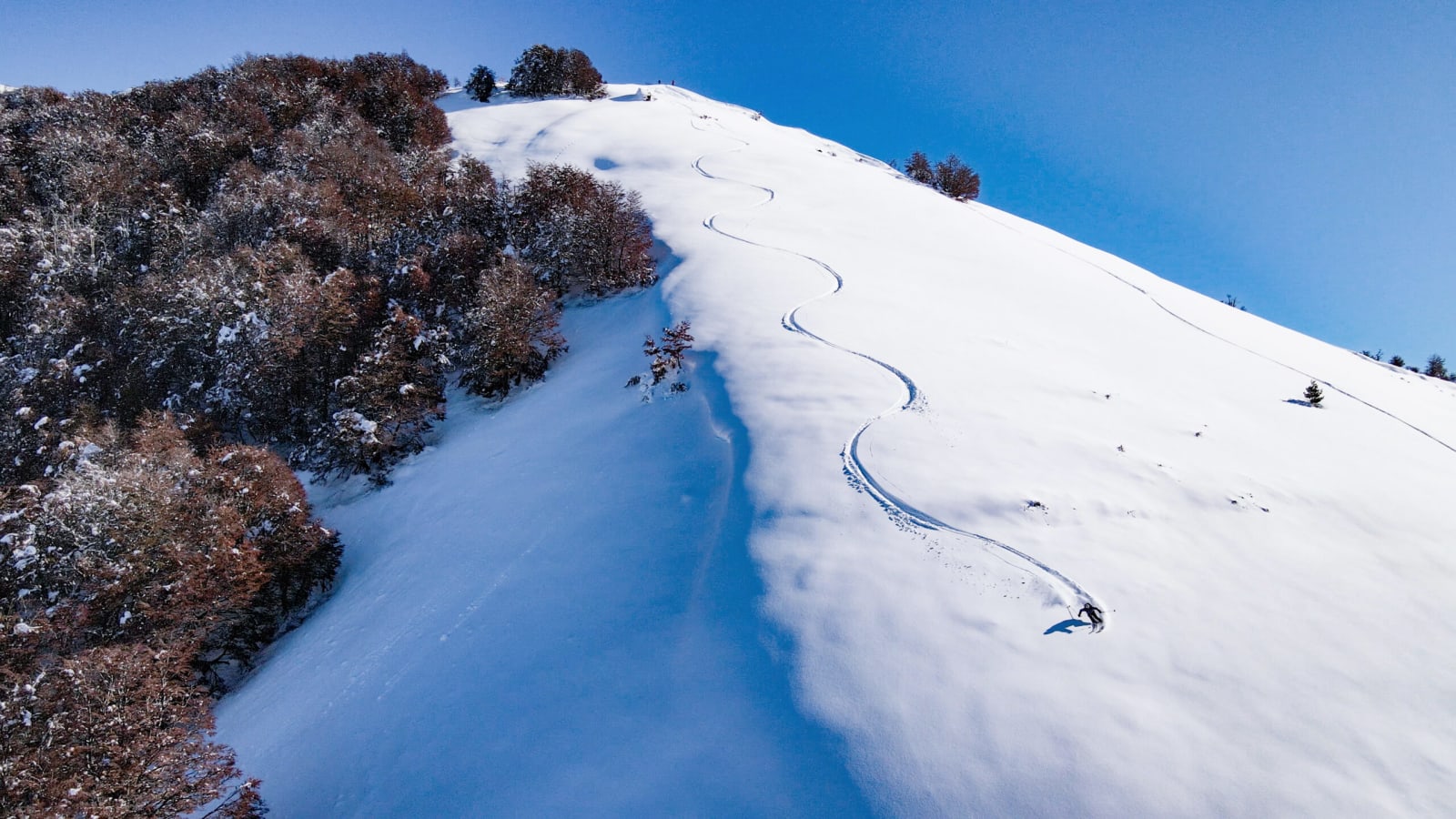
It was a classic Bariloche day. Crisp cold, perfect visibility, snow squeaking under our skis. One of those days people call an “epic day.”
We had been watching the terrain since early morning. The face was perfectly angled. The aspect was good. And there were tracks. Someone had already skied it.
We stopped. We looked. And after a while, we decided not to drop in.
Not because we “knew” it was dangerous. Not because the bulletin said we couldn't go. We decided not to drop in because we couldn't prove it was safe.
There is a huge difference between those two things. And that is what this article is about.
The problem isn't a lack of information
Argentina is experiencing a boom in snow sports. More people, more zones, more days out. Avalanche information has never been so available: daily bulletins, courses, apps, groups, forums. And yet accidents keep happening.
Not because people don't know. But because knowing isn't enough.
Ian McCammon analyzed more than 700 avalanche accidents in North America and found something that makes many people uncomfortable: in most serious accidents, at least one person in the group had formal snow safety training. They weren't beginners. They were trained people.
Why? Because training gives you confidence. And confidence, poorly managed, can work against you.
What you know, what you think you know, and what you don't know
Every time you head into the mountains, you make decisions using three different types of information:
What you know: The bulletin says danger level 3 on north-facing aspects above 1800 meters. You measured the slope: 34 degrees. The wind has been out of the west for the last two days. Verifiable information.
What you think you know: The surface snow looks stable. The collapsing blocks you saw yesterday aren't visible anymore. The group has been climbing for three hours without problems. This is interpretation. You might be right. You might be wrong.
What you don't know: What's happening 30 cm deep on that specific slope. Whether there's a buried weak layer that hasn't bonded yet. Whether the slope has a convexity that concentrates stress.
The base of the triangle—what you don't know—is always bigger than you think. And the brain tends to interpret the absence of danger signs as the presence of safety. That logical leap is one of the most dangerous in the mountains.
How we go wrong: systematic errors
We don't fail out of carelessness or ignorance. We fail because of mental mechanisms that are completely normal but become dangerous in avalanche terrain.
“There are tracks → it's safe”
Simplification is necessary: the brain can't handle 40 variables at the same time. The problem isn't simplifying, but not knowing when you're oversimplifying. “The bulletin says danger level 2 → I can go wherever I want,” “I've been here ten times → I know this slope.” Each of those shortcuts reduces anxiety. And that's exactly the trap: you feel better because you have fewer things on your mind, not because you've made better decisions.
Commitment bias (or: “we've already climbed four hours”)
It's noon. You've climbed for four hours. Your group is ready. The objective was planned weeks ago. And at that moment, conditions change. A warning sign appears. Something doesn't add up. What do you do?
The rational response would be to re-evaluate and, if necessary, turn around. But the most common human response is to find a way to make things add up anyway. What you've already invested doesn't change the risk ahead of you. But it weighs on you. It always weighs on you.
Confusing outcome with decision
This is the most important and the hardest to absorb. If you cross an unstable slope and nothing happens, did you make a good decision? No. You made a bad decision with a good outcome.
The brain learns from the outcome, not the process. If you crossed and nothing happened, it registers: “that was safe.” And the next time, the threshold drops a little more. This is called normalization of risk. It happens crossing by crossing, day by day, season by season.
The problem nobody wants to mention: the group
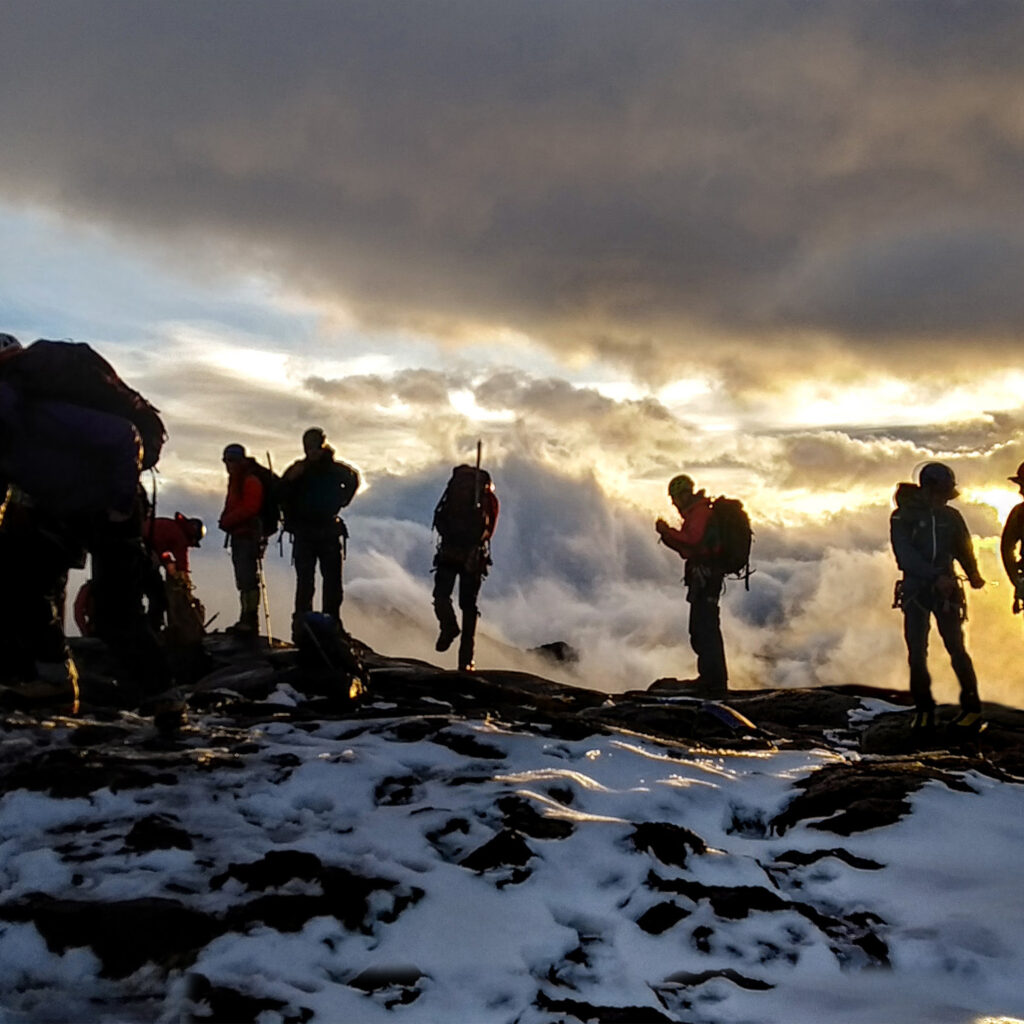
Looking back, it's strange that we skied that slope. We had planned to go to a different aspect. But when we reached the ridge, someone suggested exploring to the north. It was a quick decision. We were cold and, in retrospect, was it really a decision? Sometimes the quickest, easiest answer is simply to say ‘yes.’ When we triggered the avalanche, we all had the same thought: What are we doing here?
This story, from researchers Joe Stock and Sara Boilen, captures something that accident data confirms again and again: in every group interaction there are two conflicting impulses. We want to be honest about what we feel (authenticity). But we also want to fit in and not be the “buzzkill” (belonging).
Bowlby's Attachment Theory and Maslow's Hierarchy of Needs agree: belonging is a primary human need. Authenticity is secondary. That explains why competent, experienced people say ‘yes’ when they really mean ‘I have doubts.’
Instead of saying “I don't feel comfortable on this slope,” we say “Should we get a little closer and take a look?” That softened language doesn't convey the real urgency. And the group may not realize there is a genuine objection.
The aviation industry discovered exactly this problem in the 1970s: copilots who prioritized psychological safety (belonging) over physical safety. The response was CRM (Crew Resource Management), which creates cultural norms that give every team member a way to be authentic without losing their place in the group.
What we can do: concrete tools
The good news: this can be solved. It isn't easy, but there are proven tools that change group dynamics and the quality of decisions.
1. Radical candor: say what you think before it matters
Kim Scott, in her book “Radical Candor,” describes candor (brutal honesty) as what happens when we care personally about our partner and challenge them directly. It's the antidote to softened dialogue. We protect others from our truth because we think our truth will hurt them. But it's the avalanche that will hurt them.
To put it into practice in the mountains:
Set team agreements before heading out: “We agree that anyone can say they have doubts, even if they can't explain exactly why.”
Tune in to your intuition: A bad gut feeling almost always precedes an accident. You don't need to be able to articulate it perfectly to voice it.
Speak with the urgency the situation calls for: “I'm worried about that slope” carries a different weight than “Don't you guys think maybe…?”
Listen to understand, not to respond: If someone is quiet, invite them in: “How do you see it?”
2. The Debrief: learning from what went well (and what didn't)
Rob Suminsby, a retired USAF fighter pilot with more than 2,500 hours in fighter jets, translated the lessons of combat debriefing to the backcountry. His proposal is the acronym OPEC:
O — Objective: Did everyone in the group have the same objective for the day?
P — Planning: Was the bulletin reviewed? Were alternative routes identified?
E — Execution: Was there complacency in the terrain? “Powder fever” that made someone lose focus?
C — Communication: Did everyone understand the plan and the changes? Were there voices that went unheard?
The debrief doesn't have to be long. It can be done in the parking lot in five minutes. What matters is that the day's lessons are stated explicitly before the euphoria of the descent wipes them away.
3. The Continuous Debrief: the most powerful of all
Researchers Sara Boilen and Ian McCammon documented that debriefs are frequently skipped and, when they do happen, tend to focus on the positive. The result is a serious cognitive problem: our memory constructs an embellished version of reality. Risky moments that turned out fine are remembered as “perfect” days, not as risky situations that turned out fine. Over time, that inflates confidence and distorts future assessments.
Their most powerful proposal is the continuous debrief: instead of saving everything for the end of the day, talk about notable events as they happen. On the uphill, during breaks, at transitions. When this becomes the group norm, the end-of-day debrief tends to be short and easy.
Risk perception ≠ Risk tolerance
Guide Julz Holder introduces a distinction that gets overlooked in almost every avalanche course: perceiving risk is not the same as being tolerant of it.
Risk tolerance is the level of risk you're willing to accept to achieve your objective.
Risk perception is the subjective assessment of how much risk a specific situation represents.
Two people can have exactly the same risk tolerance (both want to get home), yet perceive the risk of the same slope in completely different ways. If perception isn't aligned, talking about “consensus” is an illusion. What looks like agreement is really a group where some people gave in to social pressure without being convinced.
The alternative Holder proposes is informed consent, borrowed from medicine: the most experienced person in the group has the responsibility to share their risk perception explicitly and understandably, so that everyone can decide whether to consent to participate with real information.
Group culture is safety infrastructure
Rescue gear, the avalanche transceiver, the airbag, technical knowledge: all of that is necessary. But not sufficient.
What makes the difference is group culture: Is it safe to speak up? Are all voices heard? Do we learn from every outing, or do we simply celebrate that we made it back? That culture doesn't appear on its own. It has to be built, deliberately, with concrete tools.
Candor, structured debriefing, and informed consent are those tools. Implementing them takes practice and a willingness to create moments of productive discomfort. But the price of not implementing them can be much higher.
Nothing happening doesn't mean you decided well. And that is, perhaps, the hardest lesson to absorb in the mountains.
Thanks for reading.
Sources and recommended reading
Stock, J. & Boilen, S. (2026). “Candor: Our Most Important Safety Tool?”. The Avalanche Review, 44.4. · Suminsby, R. (2026). “Top Gun Debriefing”. TAR 44.4. · Boilen, S. & McCammon, I. (2026). “Rethinking the Debrief”. TAR 44.4. · Holder, J. (2026). “Risk Perception vs. Risk Tolerance”. TAR 44.4. · Scott, K. (2019). Radical Candor. · Kahneman, D. (2011). Thinking, Fast and Slow.