


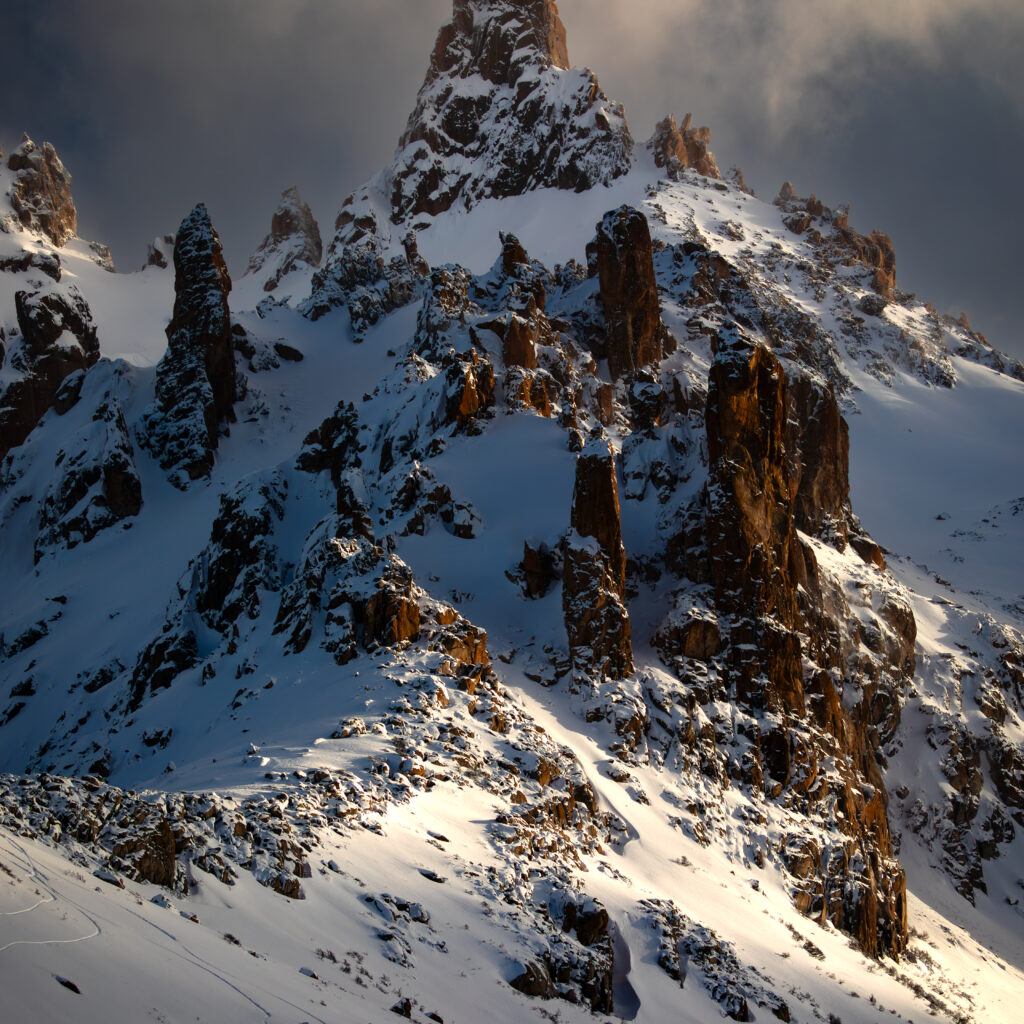
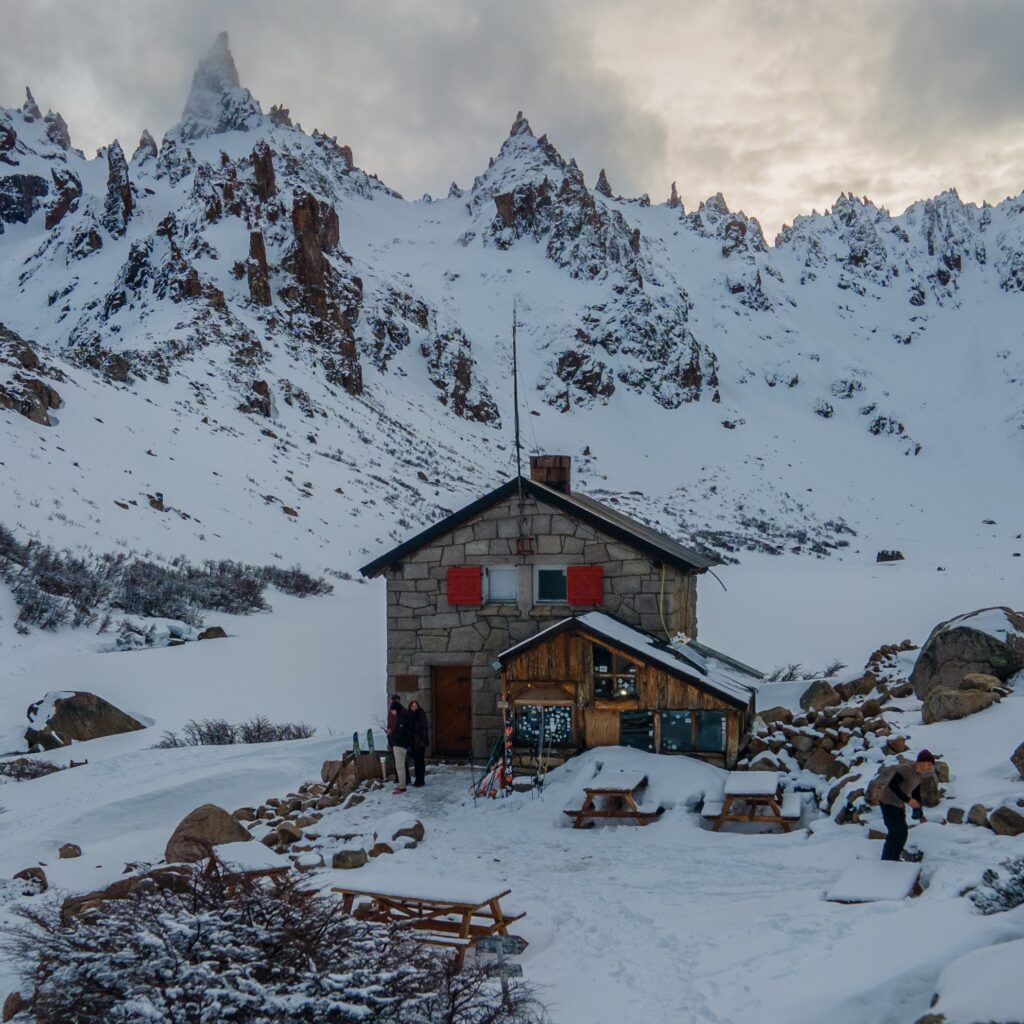
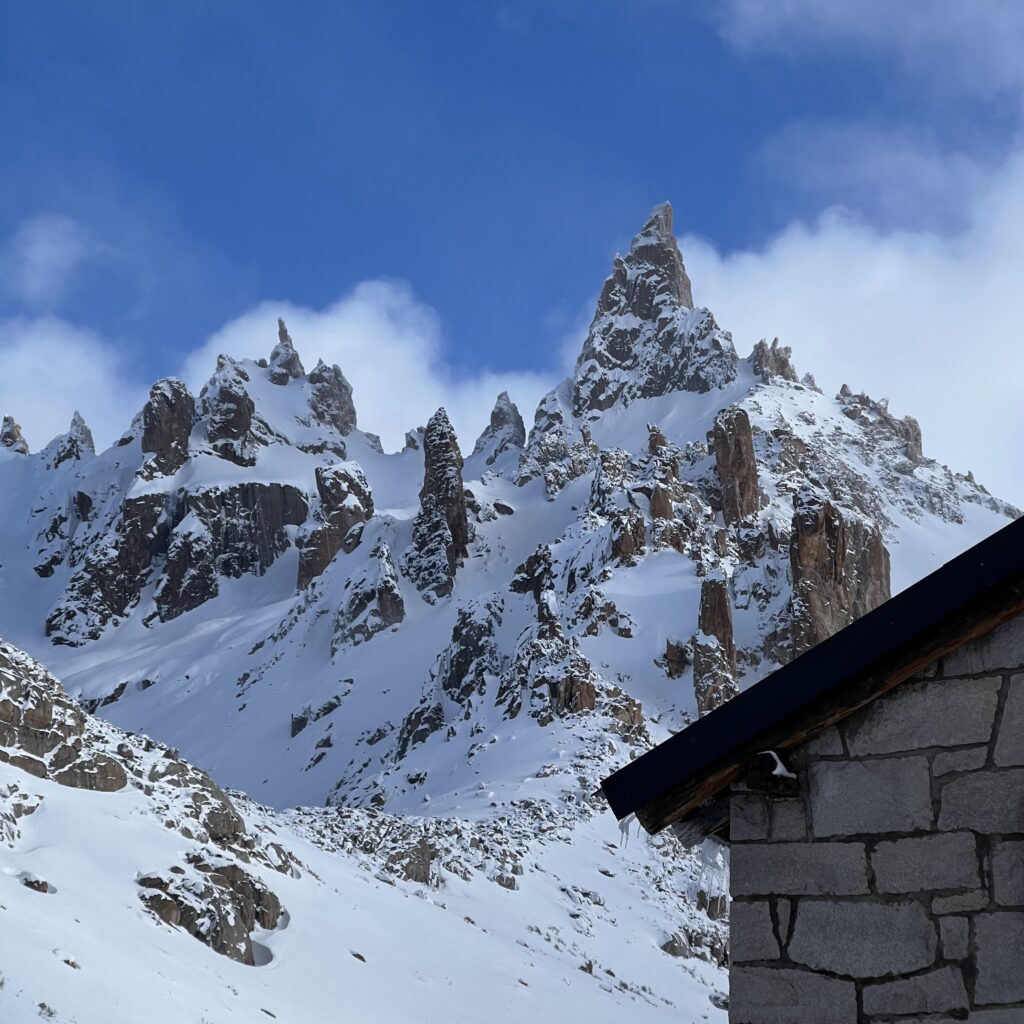
If there's one place that sums up everything great about Patagonian backcountry, it's Refugio Emilio Frey. Golden granite towers, couloirs several hundred meters long, a frozen lake, and a hut that has been a gathering point for people who love to go beyond the ski resorts for decades. Whether you're taking your first steps in this activity or looking for committing, demanding terrain, here's what you need to know before you go.
Almost 70 years of history in the mountains
Refugio Frey didn't come out of nowhere. It's named in honor of engineer Emilio Frey, a key figure on the 1895 boundary commission led by Francisco Pascasio Moreno and one of the founders of the Club Andino Bariloche.
The foundation stone was laid on April 4, 1954, and the hut was officially inaugurated on February 17, 1957. Since then, it has become one of the most emblematic destinations in the mountains of Andean Patagonia. Today, almost 70 years later, it is one of the Bariloche huts that stays open 365 days a year.
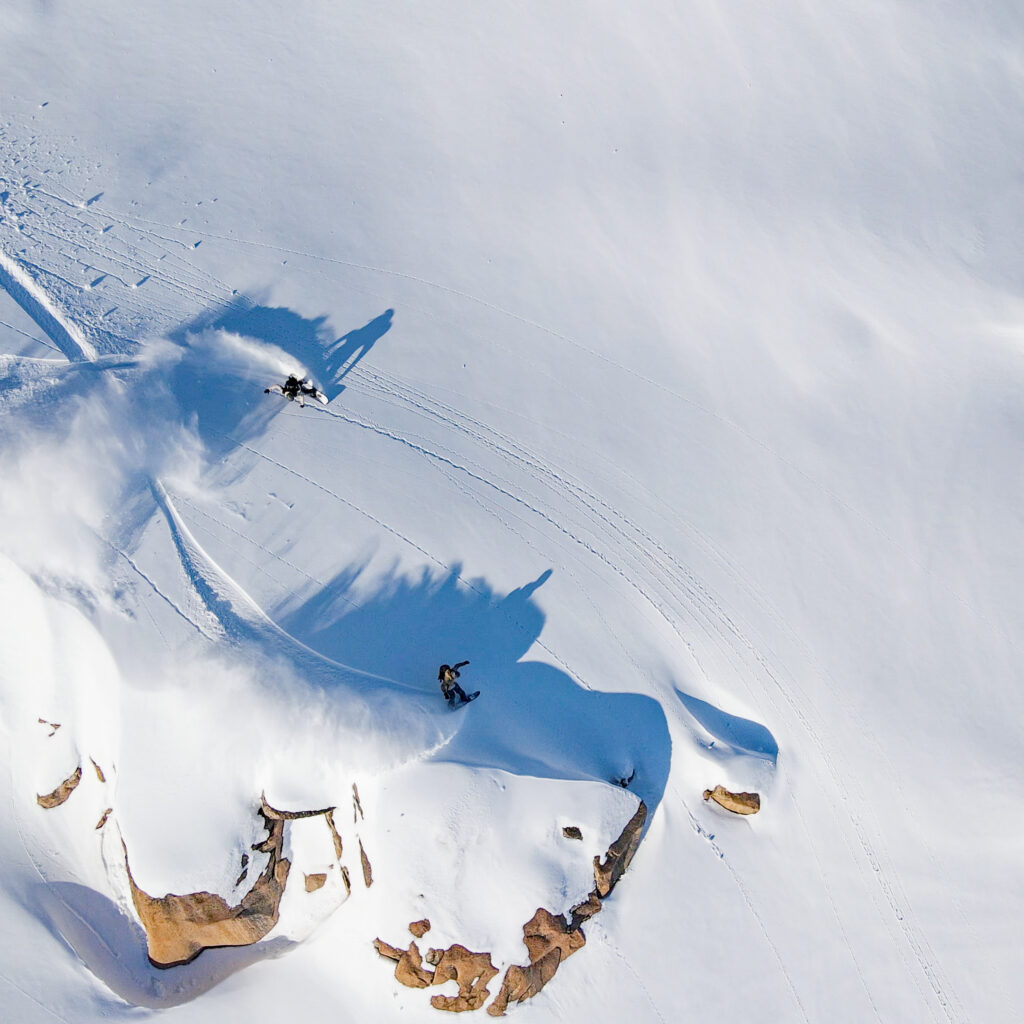
Where it is and how to get there
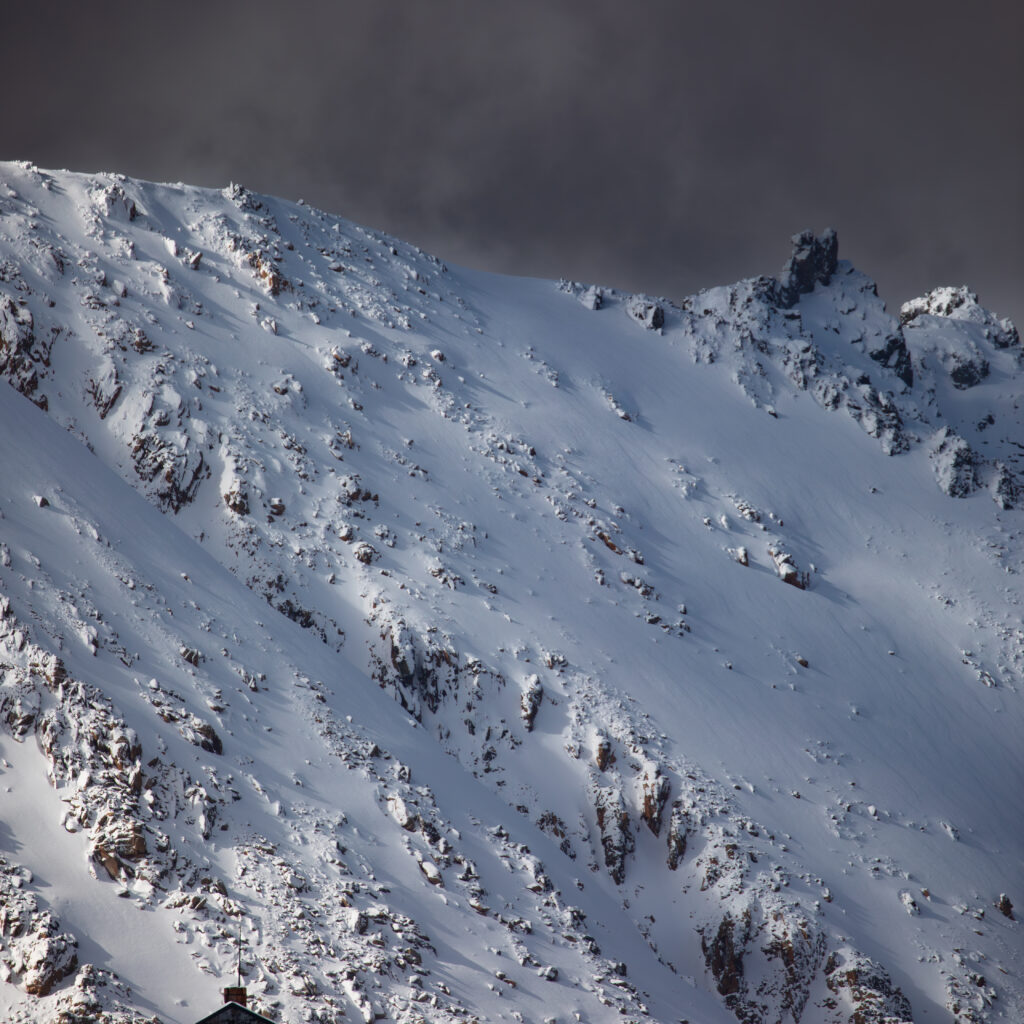
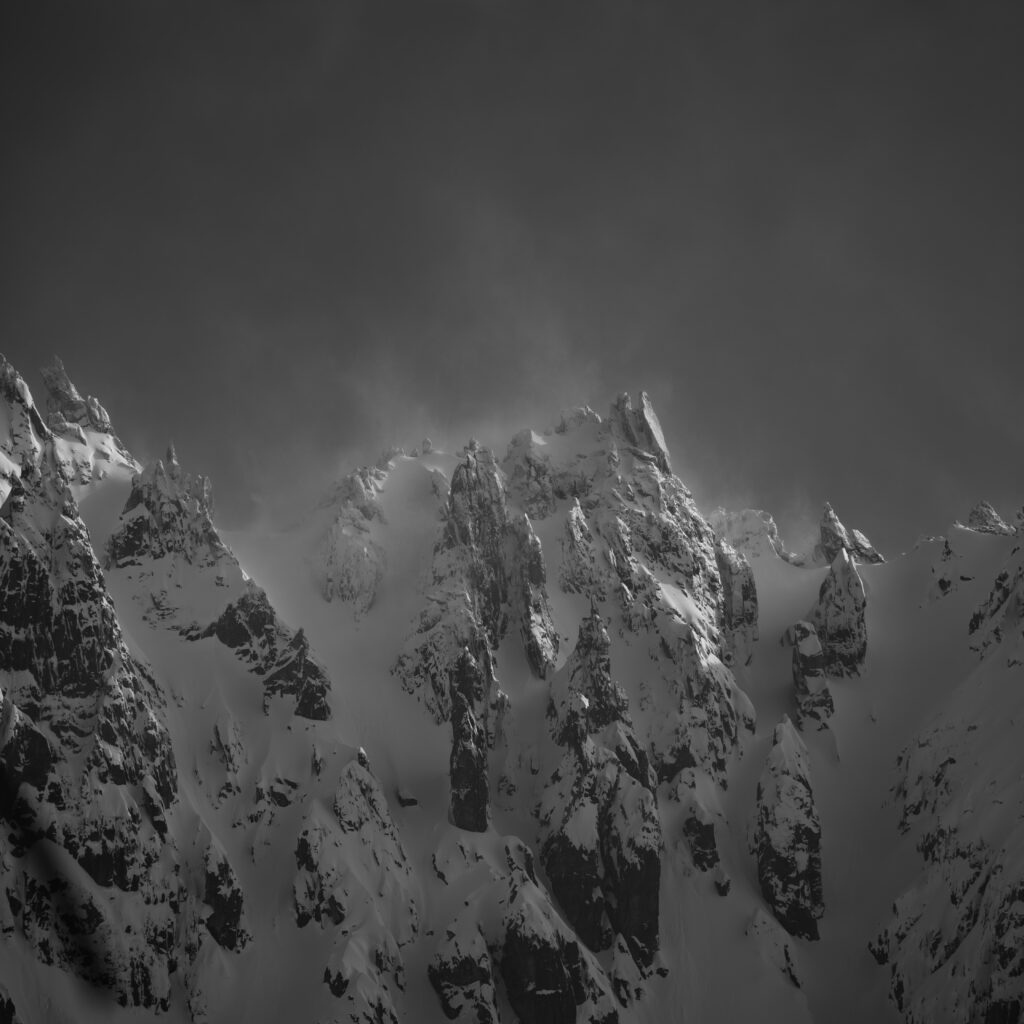
The hut sits on the shore of Laguna Toncek, at 1.700 meters above sea level, inside Nahuel Huapi National Park. It's framed by the spires of Cerro Catedral, that granite cirque that's a magnet for climbers in summer and skiers in winter.
In winter, access starts from the parking lot at the base of Cerro Catedral. The trail follows a different route than in summer to avoid avalanche terrain, but you can still get there on foot. Our preferred option is to use the Cerro Catedral lifts to gain elevation and then cross over to the Van Titter Valley; we cover the details in Day 1.
Winter temperatures range from a high of 7 °C to a low of -10 °C. The Patagonian wind can drop the wind chill drastically. This is not a destination to improvise.
The hut: what you'll find inside
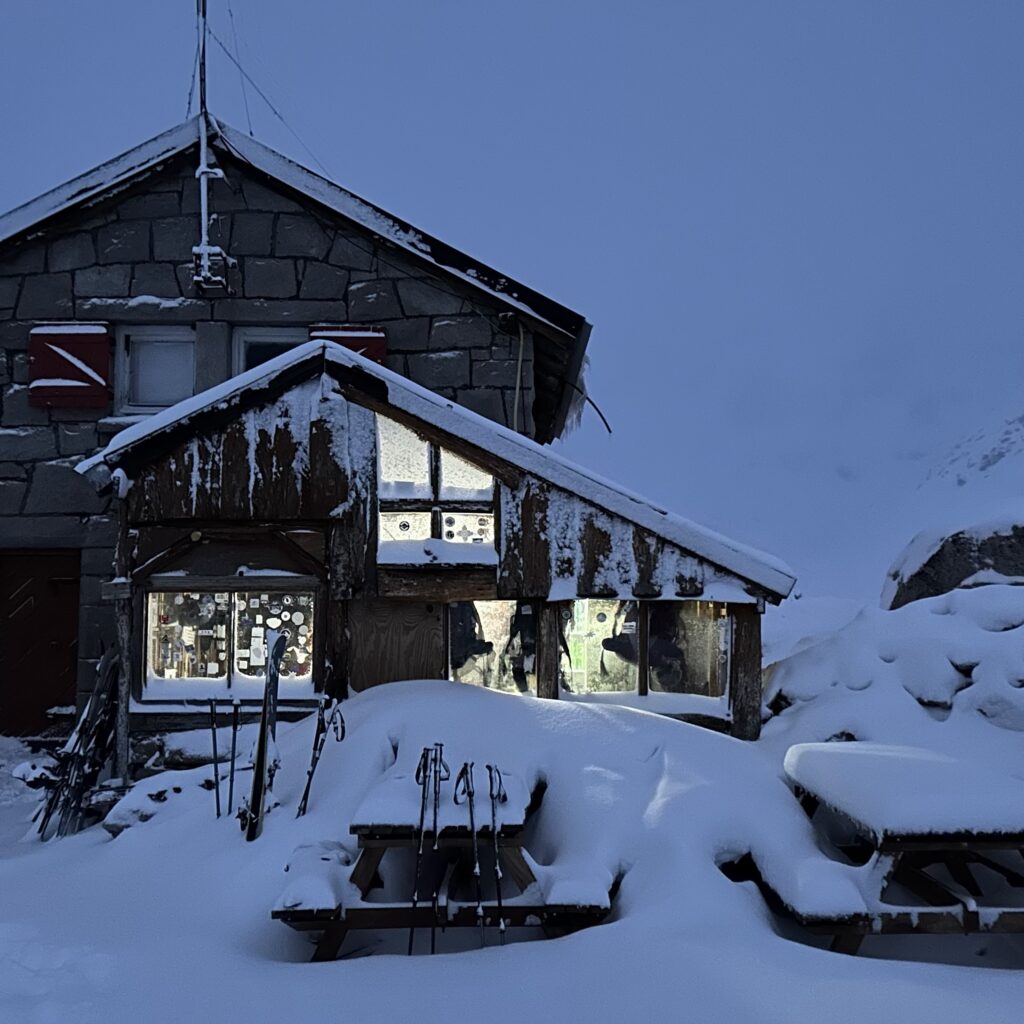
The building, with its thick stone walls, sleeps 35 people. The kitchen and dining room are on the ground floor; the bunk rooms with mattresses are on the second floor. The hut offers breakfast, lunch, and dinner service, plus drinks. There is no space for cooking, so if you bring your own cooking gear, you'll use it outside or in the camping areas.
Reservations are required, both for staying overnight in the hut and for the campsite. Book through the official website before planning your trip: https://refugiofreybariloche.com/reservas/
The restroom is available to everyone
One step many people skip, and it's mandatory: before heading out, you need to get the Nahuel Huapi National Park ski touring permit. It's also essential that someone knows where you'll be in case of an accident, so fill out the LIK (emergency communication system). https://nahuelhuapi.gov.ar/esqui-de-travesia/
Winter terrain: day by day in the cirque
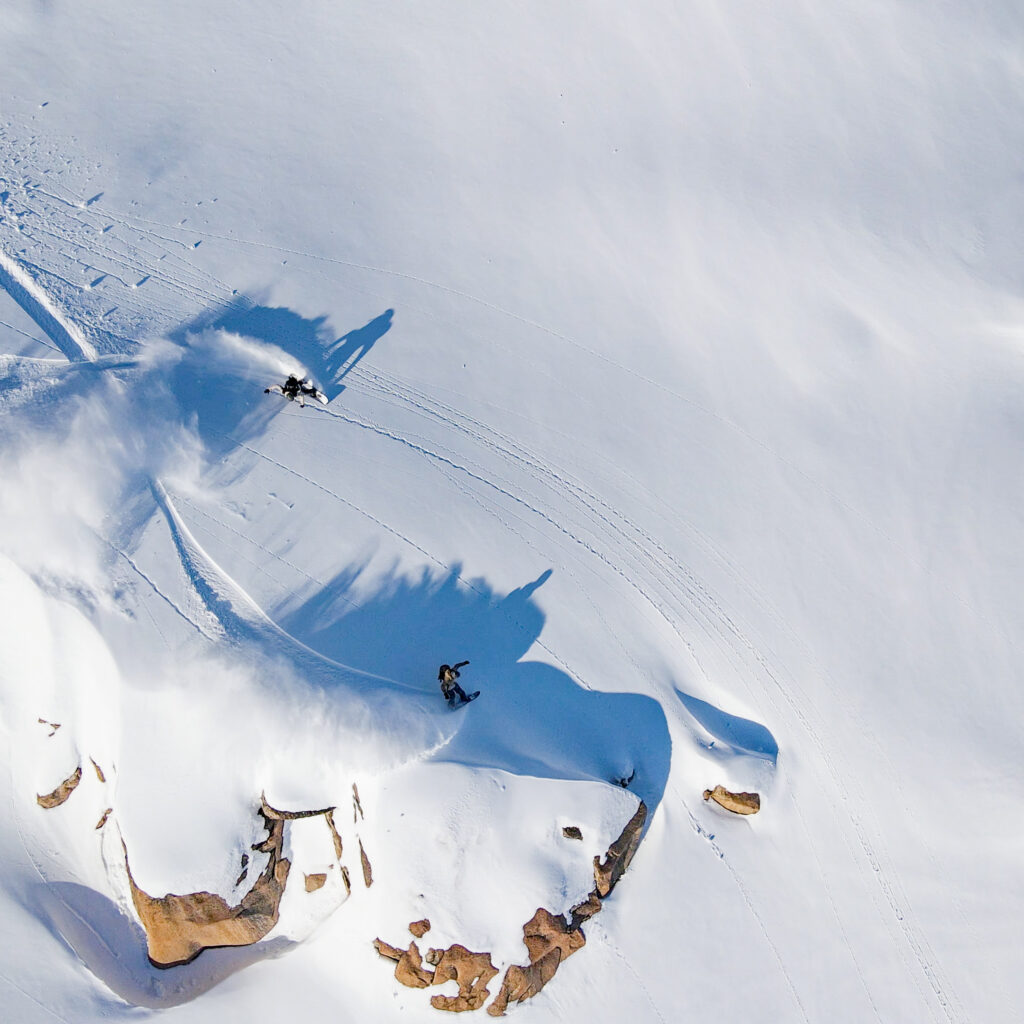
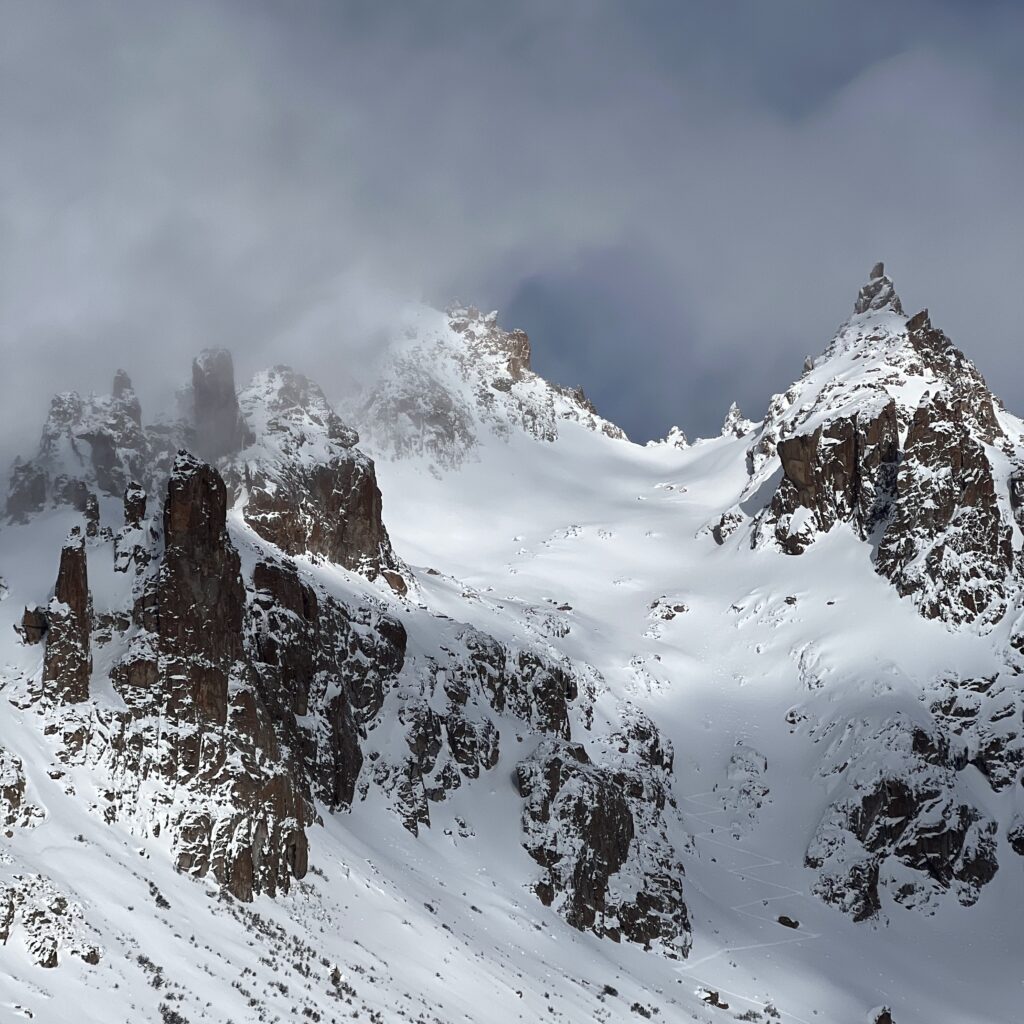
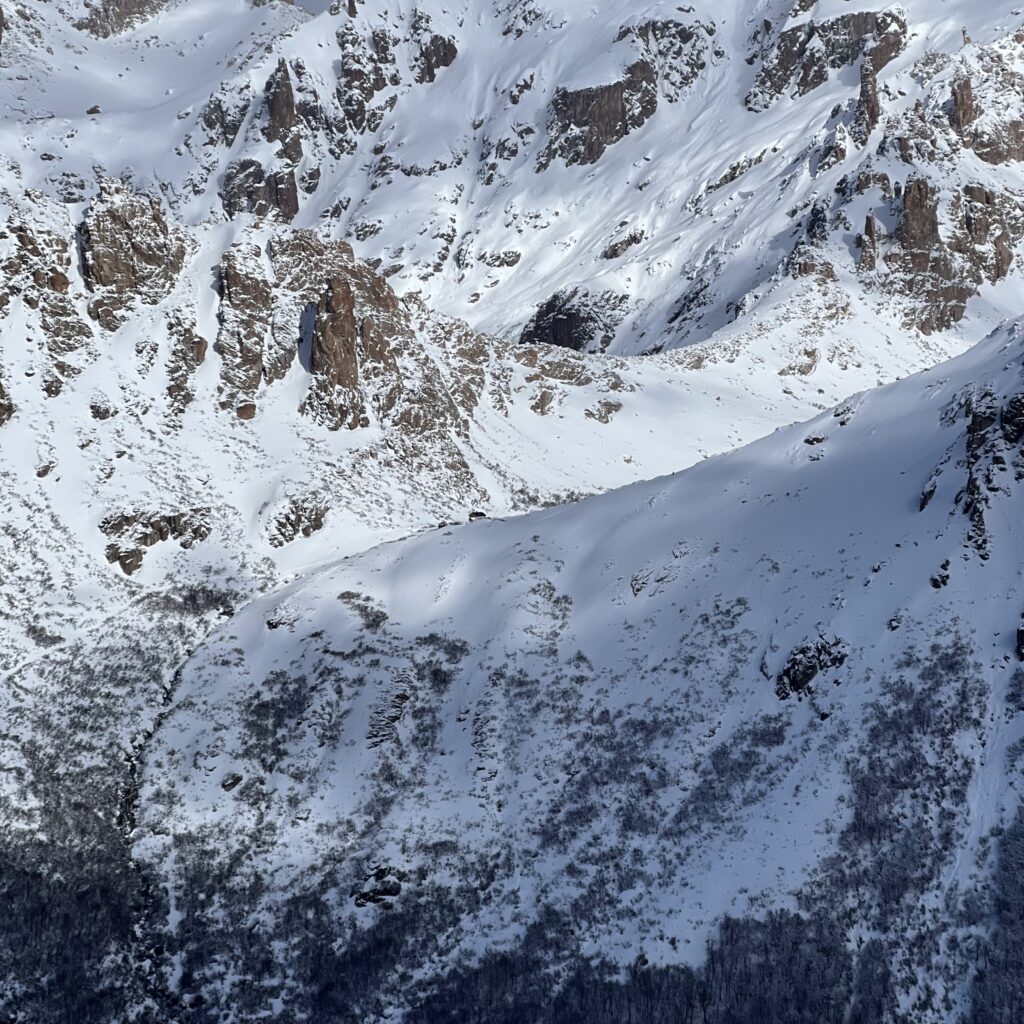
The cirque surrounding the hut offers a range of backcountry terrain that few places in the world can match.
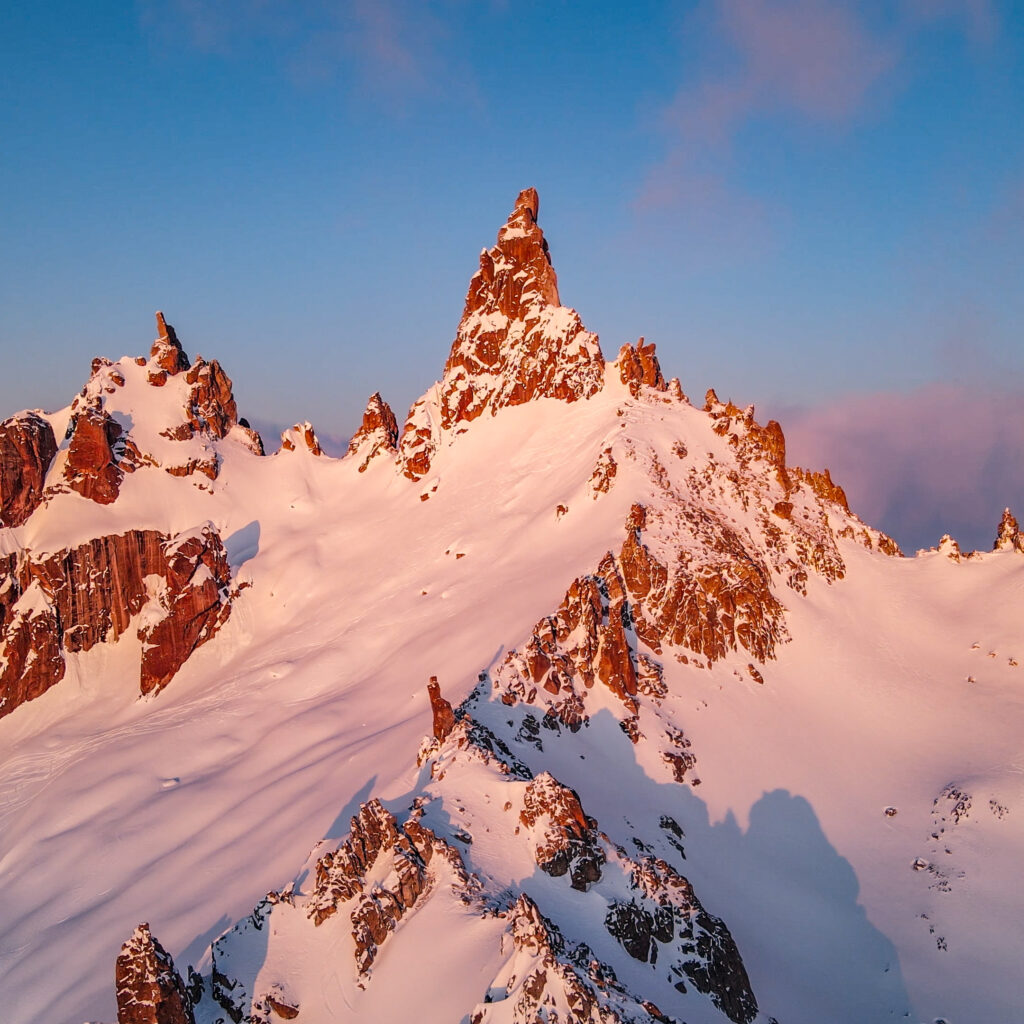
Day 1 — The crossing to Frey via Van Titter
The first day is already part of the experience. You head up Cerro Catedral, take the Nubes chairlift, and find the ridge to cross into the Van Titter Valley. From there you're already on a different wavelength: far from the lift lines, the music, and everything a ski resort brings. With your mindset in mountain mode, it's time to decide where to descend. The classic option is to ski down to the valley floor, about 500 meters of descent at 25 to 35 degrees: alpine terrain with a good pitch, some nice turns down the valley, and then you reach the high forest. From there it's about an hour and a half of skinning to the hut, going up the right bank of the river that drains from Laguna Toncek.
You arrive at Frey, step into the dining room, and through the window you see the yard: the cirque of spires out front, a whole world ofpossibilities . if you feel like doing one more run, the south face of Col Parótidas is a good option, and while you're there you can peek into the Campanile valley to see how everything looks. The descent is a wide slab of about 200/250 meters. Back to the hut, a few mates while you wait for dinner, skins and boots drying, and then off to the sleeping bag.
Day 2 — La Faja de la Vecinal
With rested legs, Day 2 is for getting into the cirque. A classic to start with is the Faja de la Vecinal: from the hut it's about an hour and a half of climbing, with around 400 meters of vertical gain and a 35-degree pitch. SE aspect. From the top you can access the 3 Marías and the Central, the last two at 45 degrees and much narrower.
If the Faja isn't in good condition, a good alternative is to climb the North of the Principal, a bit farther south, looking left from the hut. With a north aspect, wider and a bit less steep than the Vecinal, it's a very good option to start getting around at Frey. Once you start walking, you'll see another option on your right: the Planchón Sur, reached by climbing up to Laguna Schmoll and finding a spine that takes you above the slab. When a storm drops snow without wind, this aspect always holds good snow. Between these options you can add up your 1.000 meters of vertical for the day.
Back to the hut, dinner, dry skins and boots, and wait for the sun to rise again.
Day 3 — El Campanille and Pico Bara
Day 3 is the center of the universe. The granite walls start to glow in the sun, and the snow crunches under your boards. We recommend heading straight for the East of the Principal and checking out the next cirque over: the Campanille. Wow. It has about 700 meters of vertical and is a setting from another world. The climb is about 2 hours at a steady pace. The descent leaves you at the valley floor, and from there you need to climb Col Parótidas to return to Frey.
It always has something saved up: Pico Bara, south aspect. If it's already past noon, you'll find powder — a pretty wide slab that lets you ski down from the col, or climb about 300 meters more to the summit, and that puts you at 1.000 meters for the day. A good average. In the afternoon you return to the hut: same ritual of mate, drying gear, dinner, and a little wine, because today we celebrate that tomorrow is a good day to head home.
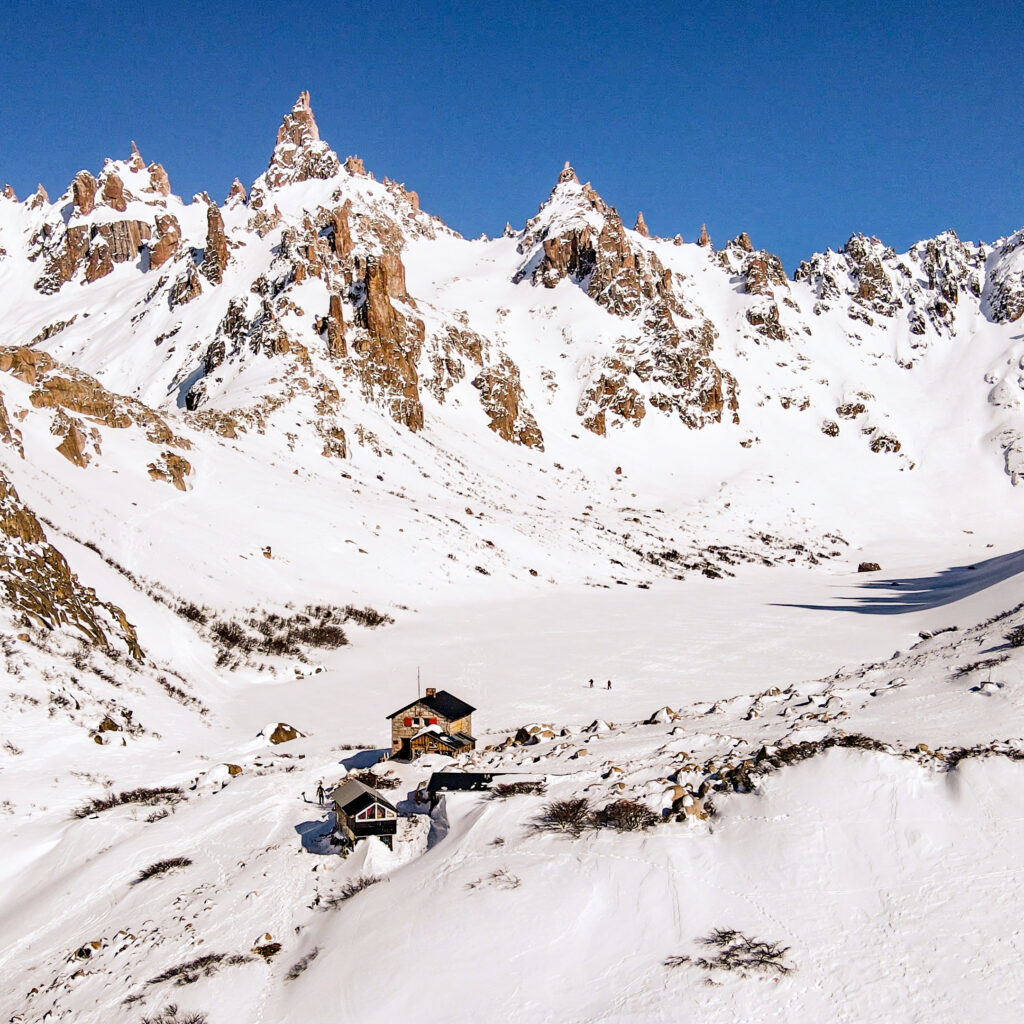
Day 4 — The return
You wake up to the smell of toast, have breakfast, and start packing. The return can go several ways. If you want a bit more skiing, you can climb up to the Piedra Inclinada and ski down from there to the Van Titter Valley. Good visibility is essential, because this is the return route with the most exposure to avalanche terrain, with about 700 meters of vertical. From Col del Viento you regain the Catedral ridge and ski down through the resort.
Another, quicker option is to exit via the Mango de Pistola: from the hut you ski down to the Van Titter Valley, put your skins on, and across from you there are some big boulders. You pass close to them, and from there, looking up, you'll see the Mango de Pistola with a col on the right. Once you cross to the other side, you reach La Laguna, a classic Catedral spot. From there, if there's snow, you can ski all the way to the base.
A celebratory beer, and that's a Frey trip in 4 days. For me, the ideal is 4 days minimum: enough time to enjoy the place, ski the cirque, and leave wanting to come back.
What to bring: the gear you can't go without
Frey is a place to go with all your lights on. Don't let your guard down or underestimate the terrain.
What to bring: the gear you can't go without
Frey is a place to go with all your lights on. Don't let your guard down or underestimate the terrain.
Technical gear:
- Skis or splitboard
- Climbing skins
- Ski crampons (for ascending on ice)
- Crampons
- Helmet
- Ice axe
- VFH
Avalanche safety:
- Beacon, shovel, and probe — no exceptions
Appropriate clothing
Extras:
- Repair kit
- First aid kit
- Extra gloves
- Change of clothes for the days at the hut
Go with a guide or go on your own?
The terrain at Frey is considered among the best in Patagonian backcountry, but it's also serious terrain that doesn't forgive. If you go on your own, you need winter mountain experience, knowledge of risk management in snowy terrain, and the ability to make good decisions autonomously.
. Frey Freeride · September 18 to 21, 2026
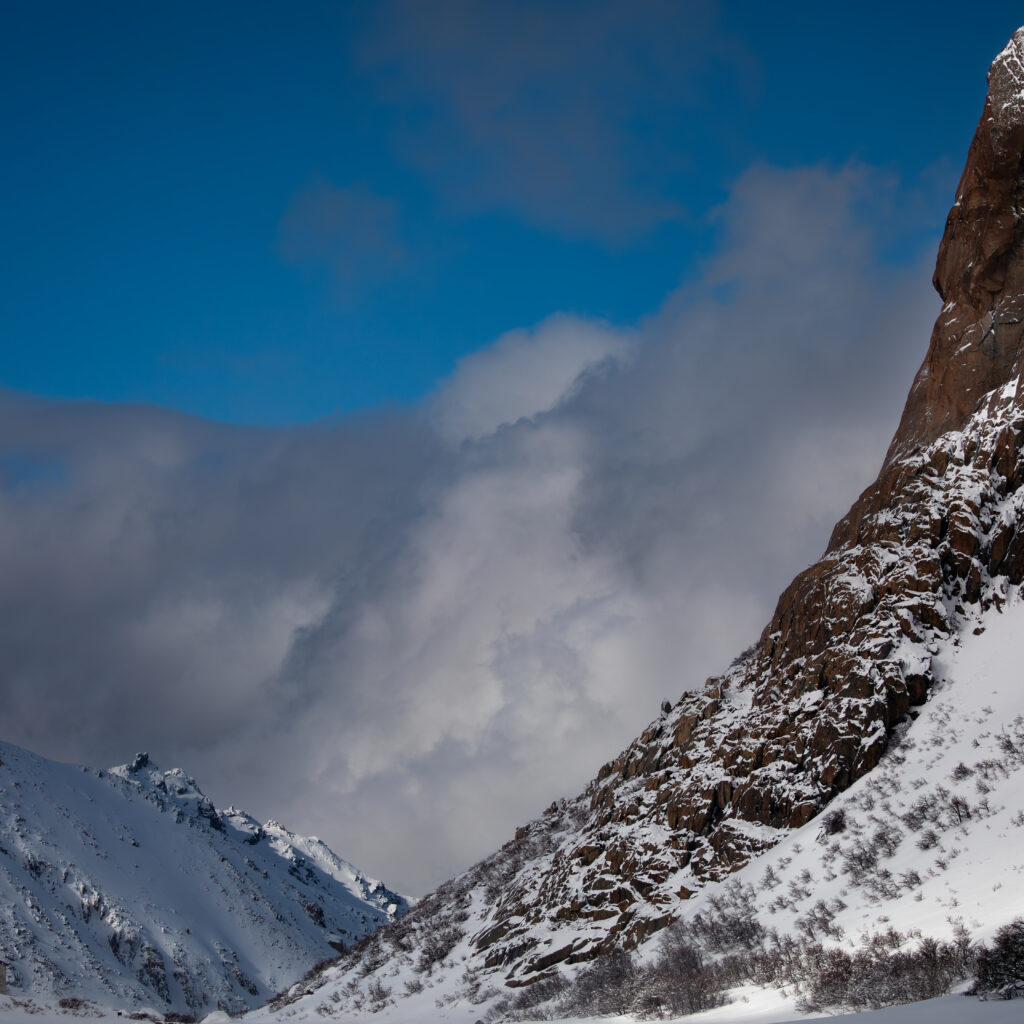
In summary
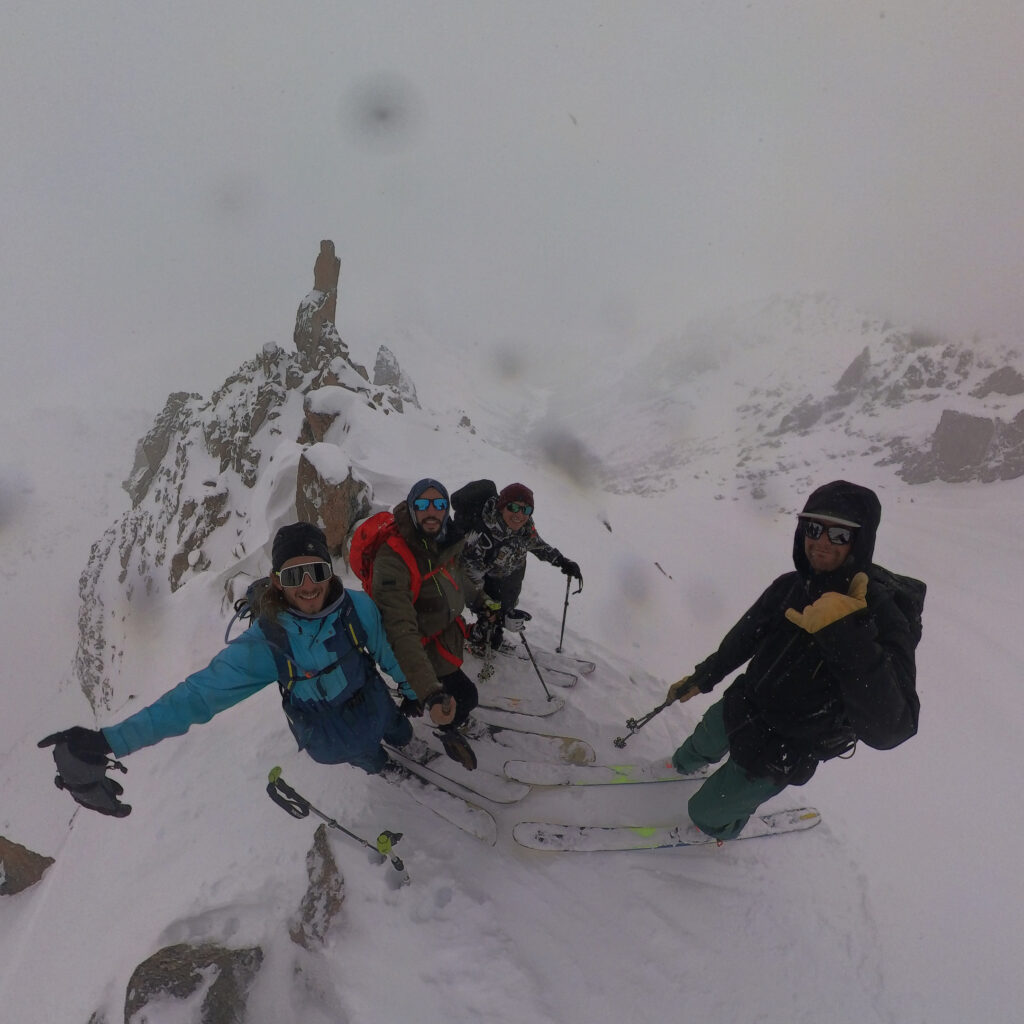
Refugio Frey in winter has a little bit of everything: history, terrain, scenery, and the warmth of a mountain hut in the middle of Andean Patagonia. It always makes you want to come back. Hopefully this winter finds us there, among mates, drying skins, and a yard with a whole world of possibilities.
Jeremías Palavecino · Ski Guide — A3 Pro Member