


Or rather: do you carry one?
Let's picture two situations. One mild, and one that's the nightmare of your life. You're on a long traverse, say 5 lagunas on your skis or splitboard. On day two, leaving Laguna Negra, you put a lot of force on your pole and snap it. And now, who will come to my rescue? My complete repair kit.
You continue the traverse, and on day three you're on the Capitán ridge, far from everything. Far, far away. Snow conditions are incredible, and your skis sink about 30cm into the powder. You take them off and you're buried above the knee. On a descent you come in way too excited, catch an edge and eat it, blow past your line and rip out your binding (true story). All four screws came out completely.
Without a repair kit, what are your options? How long will it take you to drag yourself out to Pampa Linda? Is it even possible? The way to avoid a very frustrating evacuation, or in simpler cases having to abort the mission, is to invest in a quality repair kit that can fix most problems.
Below, we'll show you what we carry on our day trips and what we carry on multi-day backcountry tours.
The essentials for a full day.
Depending on how far out our trip goes, it's always good to think about the worst-case scenario. Our repair kit should adapt accordingly. Are we going to be out after dark? How hard is it to get back to the car? Our kit will be much simpler if we're out near a ski resort than on a remote traverse with complicated access. No matter how long your outing is, here are some essentials that are good to have in your pack.
Spare batteries.
Most avalanche transceivers take AAA batteries. If we get to the parking lot and someone in the group has less than 50% battery, they stay behind. Something basic and lightweight: three AAA batteries.
#BCCtip: Tape all 3 together so they stay together.
Knife.
Sometimes you'll simply need to cut something. The snack plate, the salami, the cheese, a cord or clothing. In the worst case, it's an emergency where someone has a serious trauma and you need to expose something buried under many different layers. Either way, carry one. If it has a little saw, even better! Make it foldable, sharp and lightweight.
Multi-tool with pliers.
This multi-tool could also be your knife, as long as it's good quality. Pliers are great for gripping metal parts, which get pretty cold in the snow. It should also have a few different bits (Phillips and flathead at a minimum) so you can tighten loose screws on boots or bindings. It's also good if it can cut thin wire, and has a small metal saw or even a can opener.
#BCCtip: If you normally keep your kit at the bottom of your pack, keep this tool closer at hand, in a lid pocket.
Straps for life.
We Argentines tie everything together with wire. Well, not everything. In the snow, long live straps. So many uses. I carry three at all times. Broke a buckle or a tension strap on your boot? Strap. Skins falling off your skis or lost a tail clip? Strap.
#BCCtip: Leave one wrapped around your pole or within easy reach. The others go in your kit.
Spare screws.
These must be specific to your boots or bindings. If the screw holding the walk/ski lock gets lost, it's no fun skiing down with one fewer hook.
#BCCtip: If you splitboard, bring the whole hardware store. And tighten them often so you don't lose them.
Large powder baskets.
On a deep powder day, poles are useless in the snow without large baskets. Bring a spare in case someone loses theirs.
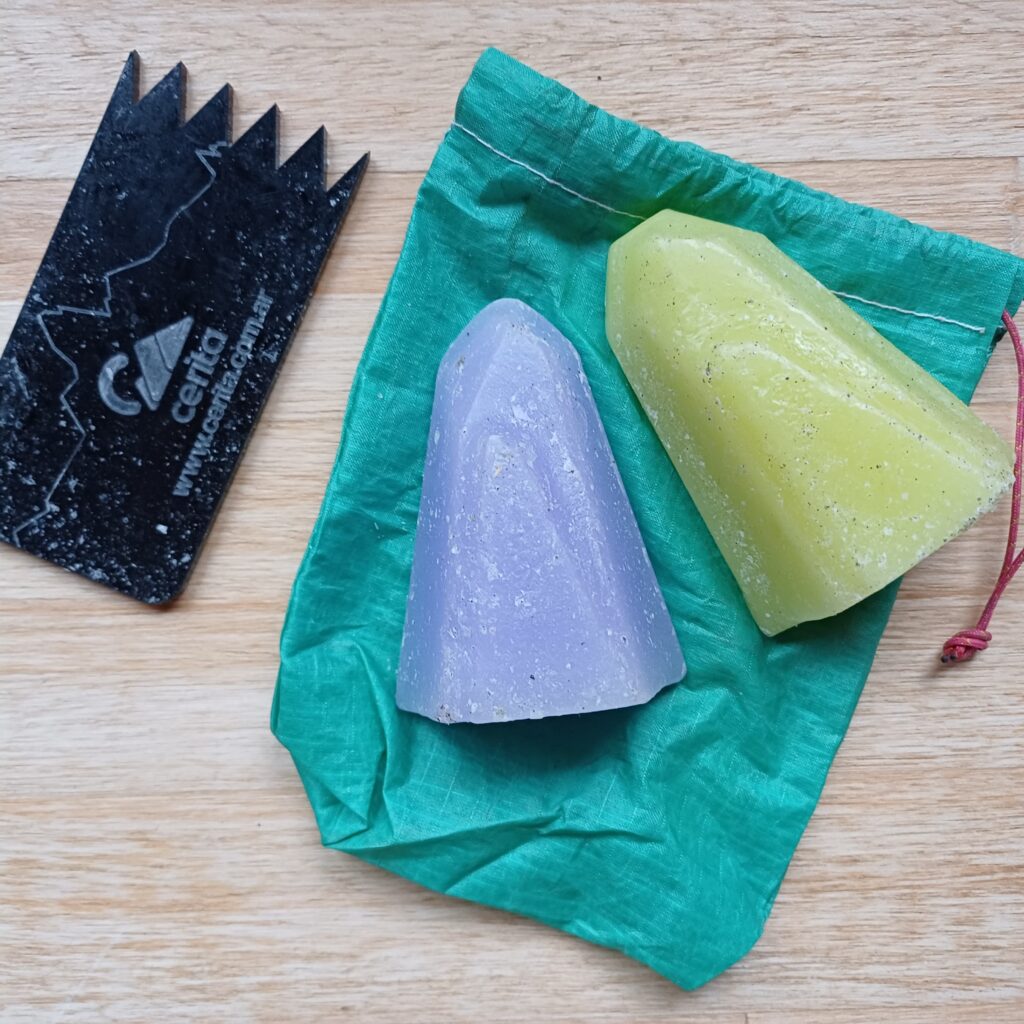
Cerita BC kit
Snow sticking to your climbing skins? Scraper. Balling up with snow clumps? Cerita skin wax. Forgot to wax and don't want to get stuck? Cold wax from Cerita. Cerita made a minimal, super-efficient kit for our outings. The skin wax is key for those days when we start out on wet snow and it dries out as we climb. Clumps guaranteed. Also carry wax for a quick pass over your bases before the day's descent.
If you're already thinking about a multi-day trip, start adding these extras.
Pole repair.
If you fall and break a ski pole, it's good to be able to fix it so you can at least keep using it and get out. With two small hose clamps you can tighten the sections and you're done. If you want to make them firmer, wrap duct tape around them. Problem solved!
Tape for everything.
Adhesive tape is a classic: duct tape, or anything similar. Some leave more residue than others. I usually keep a little on my pole and a little in the kit. From patching a tear in your jacket to whatever else you can think of, duct tape delivers!
Cord or webbing.
Carry a thin cord, either climbing or paragliding cord. They're very strong and are useful for stitching up a big tear, or tying down something that isn't secure. Always try to keep them neat and compact, with the ends already melted so they don't fray. I also try to carry a longer, stronger one in case I need to build an improvised litter.
Lighter and rubber.
A partner gets badly hurt and you have to wait hours for a rescue in the forest? An emergency bivouac? It's always good to have a fire kit. Always being careful and respectful, leaving no trace. Rubber from bike inner tubes works very well to start a small fire and keep it burning. There are also special matches or fire tablets that burn for a while. And the key is a lighter. It's good to carry it in a waterproof bag so it doesn't get wet.
Zip ties.
Having a few sizes of plastic zip ties can save you. They take up little space and last quite a while, even under friction.
Baling wire.
Lightweight, multi-purpose material, like cord but stronger. However, you need your multi-tool to do a good job with it.
Sewing kit.
For trips of three days or more, consider carrying a sewing kit so you can repair gear more permanently instead of having to rely on tape.
Broken toe piece repair.
On longer trips of several days away from home, it's good to know you can reattach the toe piece if it breaks off completely. Ski straps, wire or zip ties will work in the short term, but they need constant handling and adjustment. This is a way to reattach the toe piece permanently so you can get out of the jam. Keep in mind this will destroy your ski, but it's probably destroyed anyway. It's important that both the drill bit and the screws match your bindings. A bit with a ¼ hex shank will fit perfectly in multi-tool screwdrivers. As for the screws, if the binding allows it, the ideal ones are pan-head screws with wing nuts on top. I've also seen kits that carry T-nuts for the base, but that's more involved and you have to cut off the excess.
Stove repair.
If you're going out for two days, you'll probably have a small stove. This depends on the model you have and how much you'll use it. I've already heard of several problems with Jetboil or MSR Windboiler stoves where, lacking the canister stand legs, people can't unlock them after they overheat. Read the manual, avoid a surprise in the field and being left with nothing to eat or drink.
Storage bag for the kit.
A compact, nice bag that's big enough to hold the items in your repair kit. Ideally, this bag should be waterproof to keep the metal pieces from rusting. If it gets wet, make sure to take the items out and dry them so they don't rust.
SO, TAKE THIS WITH YOU.
What you carry in your repair kit should be specific to you and your gear, but it should contain at least the essentials mentioned above. If you head out with friends, it's important that at least one person has a complete kit that can solve the group's problems.