


Human-factor errors are the most common cause of accidents in general. Many fields, such as aviation and the automotive industry, have studied how to educate people to minimize them. The idea is to start building patterns that avoid communication failures and poor decision-making. In our field, you've surely heard about mental shortcuts and heuristic traps. This time we're talking about the mindset we bring into avalanche terrain.
Why do you need a planned mindset in avalanche terrain?
This concept comes from studies by psychologists. It describes two basic types of mindset, fixed and growth, each with its pros and cons, and how they can affect decision-making. What makes this idea so useful for mitigating risk in avalanche terrain is the mindset we need to adopt for different scenarios throughout the winter season.
Why?
Naming and assigning mindsets is a useful check to make sure everyone is on the same page when we head out. The discussion about which mindset applies to each situation should be based on evidence and uncertainty. Evidence refers to how much real data you have for the day and how valid it is for the situation. Uncertainty refers to the avalanche problems you're dealing with and how the weather could influence the outcome during the day. To address this, several approaches have been developed to mitigate these problems, and each of these ways of thinking should be evaluated when we start traveling in snowy terrain.
Assessment / opening up terrain (aspects): These are times when there is great uncertainty about snowpack conditions, either because it's your first time in that area and/or because of a lack of information after a particular event.
STRATEGY: Plan safe terrain to move through in order to gather information you can extrapolate (simple terrain). Observe challenging or complex terrain from a distance to identify signs of instability. Consult local experts, bulletins, or any reliable source of information.
Stepping out: Conditions are improving and/or we're gaining confidence in our assessment. The "stepping out" mindset covers a range from stepping out very cautiously to stepping out with confidence. Stepping out cautiously happens when there is limited confidence in extrapolating from the available observations. For example, when persistent slab instabilities are becoming harder and harder to trigger, or in the period after the instabilities left by a storm. "Stepping out" happens when you feel confident extrapolating from the available observations.
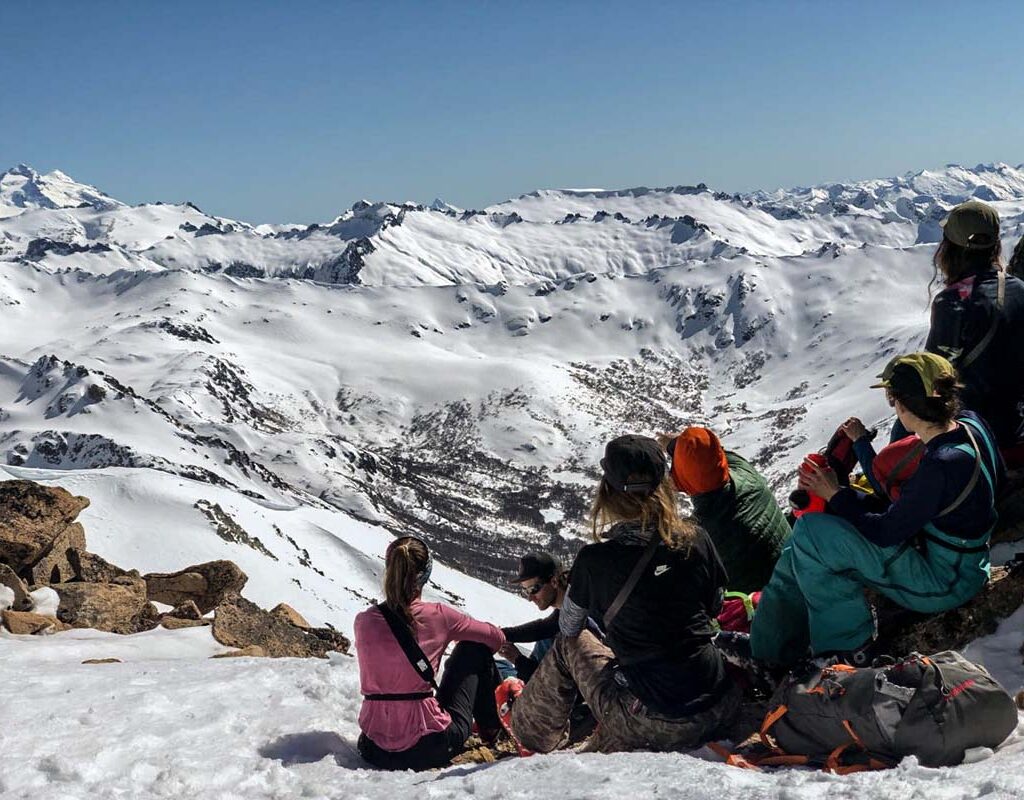
STRATEGY: Try to understand what problems are occurring in those areas and extrapolate that information to use in these new areas. Even so, we need to proceed with caution, trying to identify the slightest signs of instability that may appear so we can reassess the plan.
Status quo: There are no substantial changes in conditions or in the hazard assessment. The evidence continues to support our plan as before, and we've reached a comfortable level of exposure for these conditions.
STRATEGY: Don't change anything and continue as before. Stay alert for subtle changes in the weather and snowpack conditions.
Stepping back: The new information we had from the forecast doesn't match what we're seeing in the field. This creates uncertainty about current conditions, either because the weather is worse than forecast or because of evidence of class 1 instability.
STRATEGY: The typical strategy when stepping back is to close off terrain that has become suspect because of changes in the weather or evidence that creates uncertainty. Stepping back can be planned as storm intensity increases, or unplanned if the timing or intensity is unexpected.
Entrenchment: Dealing with a well-established persistent instability. Entrenchment is not a preferred mode for ski touring or splitboarding, and it takes discipline to sustain for as long as necessary; it is the last resort before closing the terrain completely.
STRATEGY: Avalanche risk reduction is applied methodically and well documented. Any change in weather conditions is evaluated for its potential impact on open and closed terrain. Closed terrain may still need mitigation during these conditions if it can impact open areas. Traditional safe zones may not be appropriate during these conditions.
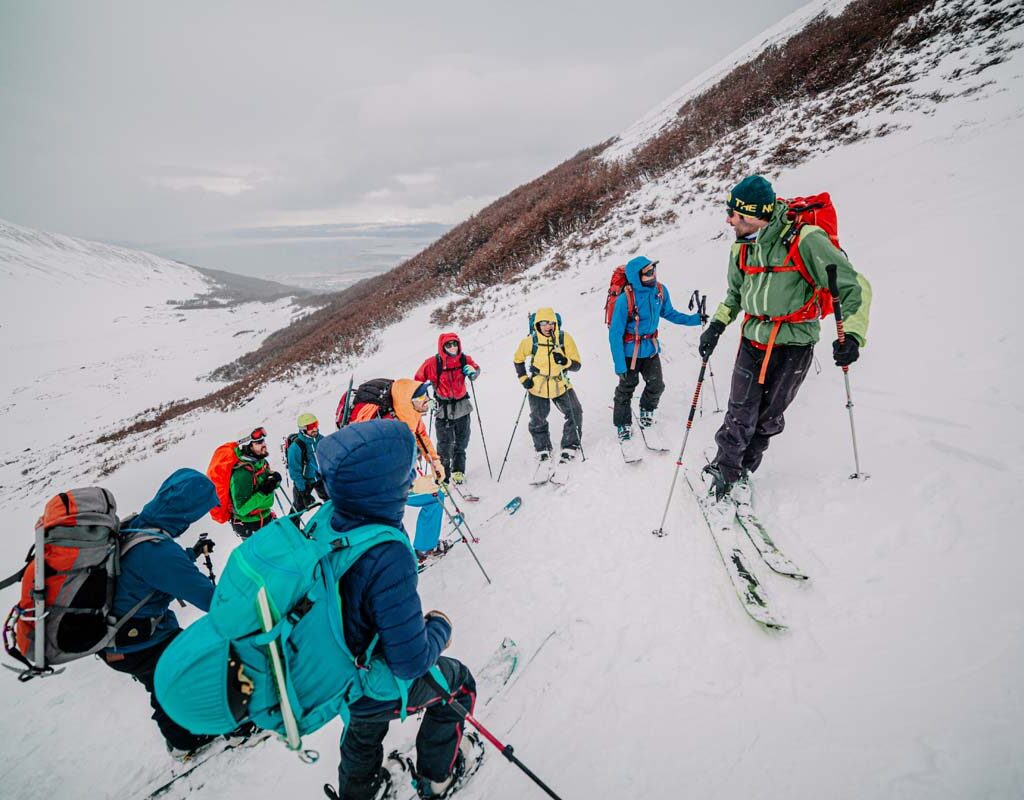
Free ride: The hazard assessment suggests that only small avalanches are possible on very isolated terrain features, and there is a high degree of confidence in the hazard assessment.
STRATEGY: Any skiable terrain can be considered, with due attention to the possibility of small avalanches on the surface. Small hand charges and ski cutting are the main assessment and mitigation tools in these conditions.
Spring daytime: The hazard assessment suggests that the only substantial hazard comes from wet loose avalanches during the afternoon thaw phase of the daily freeze-thaw cycle.
STRATEGY: Watch for a good overnight freeze and consider closing avalanche terrain during the thaw phase of the cycle. Successful mitigation depends largely on timing.
SO, TAKE THIS WITH YOU:
In our activity, the highest percentage of accidents comes from human-factor errors. One way to mitigate these errors and learn from them is to adopt a mindset when planning. We need to be aware of what we're thinking and what mindset we're in before taking the next step in our planning, so we can get home safe every time we go out. They say it takes about 10,000 hours of experience in an environment with immediate feedback to master a complex skill, and avalanches are no exception. Ten thousand hours is five hours a day for six years. That's a lot of time. Let's stay humble and be willing to give up our itinerary if conditions aren't what we expected. Effective communication and sound decision-making are key to looking after ourselves and our partners in snowy terrain.
See you next time!
Jeremias Palavecino – BC Cooperative