


Peru is one of the most diverse and incredible countries I know. Its variety of ecosystems and climates, its living culture and the warmth of its people make it a destination you can't miss. It's also an exceptional destination for trekking and mountaineering. Blue lakes, rivers, cloud forest, endless grasslands, Queñua forests, snowy peaks as sharp as blades, covered in cornices and seracs hanging from their edges.
There are two main areas for trekking and mountaineering. One is the Cusco region, surrounded by the Vilcanota, Vilcabamba, Urubamba and La Raya ranges. The other is the Ancash region, whose capital is the city of Huaraz, also known as the capital of Andean mountaineering. From this city we can access the Cordillera Blanca, Cordillera Negra and Cordillera Huayhuash.
In this article we'll focus on Huaraz as the gateway to the Cordillera Blanca. If we leave from Lima by bus, an eight-hour trip awaits us. It's a very scenic route, starting from the desert coast and climbing to almost 4,000 m above sea level along a fairly steep road, passing through numerous villages. The road then descends and enters the Callejón de Huaylas, where besides Huaraz you'll find other towns such as Yungay, Carhuaz and Caraz, which also give access to the cordillera's valleys.
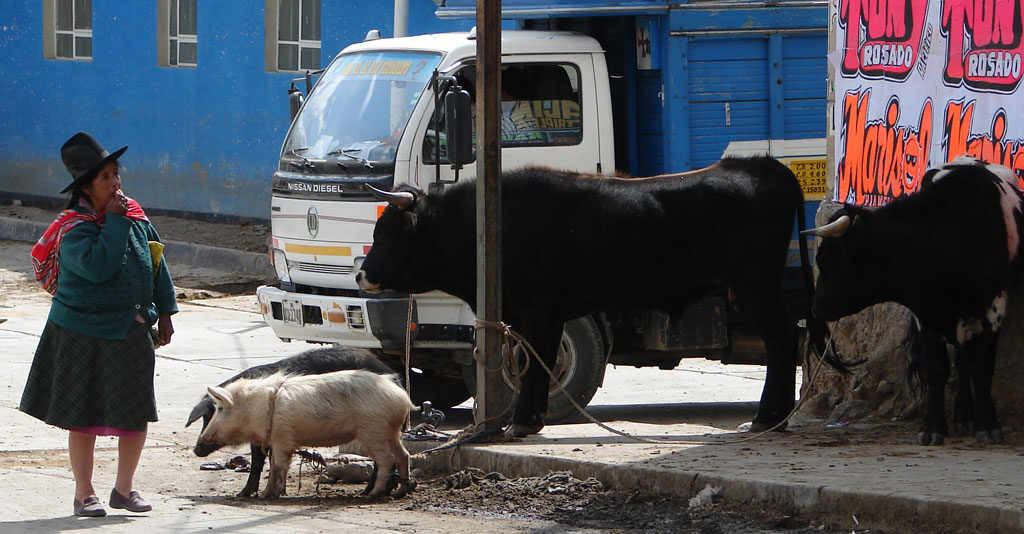
Once in Huaraz, you'll never stop being amazed. It's a mix of the Andes and living culture. The mountains seem to emerge from the puna pointing at the sky, and the taxi drivers are like bumper cars that never stop honking. The people of Huaraz have that Andean rhythm, their music, their deep roots. Visiting its markets and streets is without a doubt one of the most enriching experiences, immersing ourselves in the local culture and living day-to-day life.
There are some easier, lower-elevation hikes and peaks that help us adjust to the altitude. Whether the goal is a long trek or climbing a snow-capped peak, it's essential to use the first few days to rest well and eat well in the area.
If we decide to head into the Cordillera Blanca, most of the mountains and hikes are within Huascarán National Park. It takes its name from the highest and most imposing peak in Peru. Huascarán, or Mataraju, an oronym in Quechua, translates as 'Twin Snowy Peaks', since it involves two summits: the north summit at 6,655 m and the south summit at 6,757 m, the latter being the highest point in the country and in the entire tropical zone. It is also the fifth highest mountain in the Americas, surpassed only by Aconcagua, Ojos del Salado, Pissis and Mercedario. Depending on our objective, we can choose a daily or a monthly ticket.
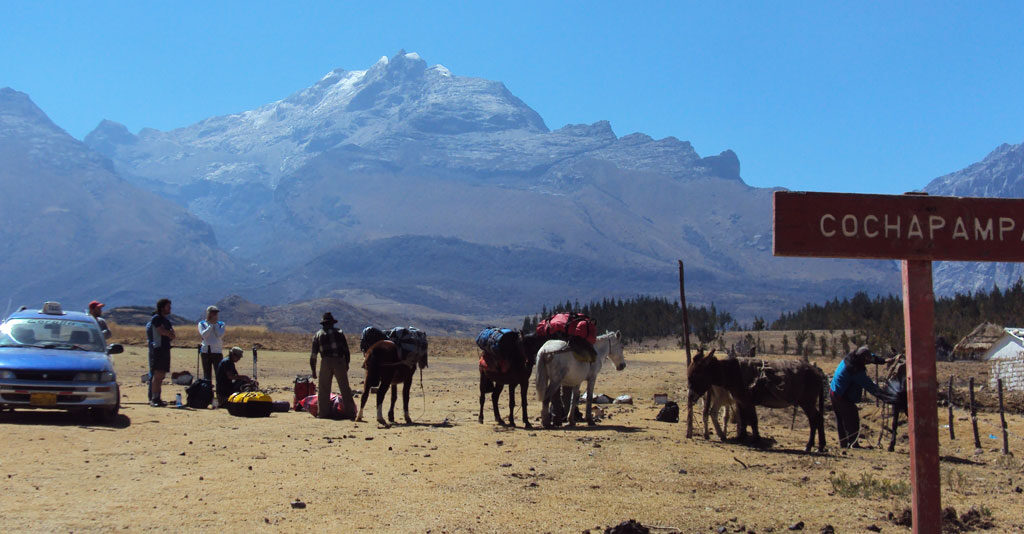
Among the most accessible mountains for acclimatization are Nevado Mateo (5,180 m), Vallunaraju (5,686 m) in the Llaca Valley, and some of the most popular peaks of the Ishinca Valley, such as Urus (5,495 m), Ishinca (5,530 m) and Toclaraju (6,032 m).
Another destination you can't miss is Llanganuco. A beautiful valley where the road winds between perfectly blue lakes and huge pristine walls on both sides. Cebollapampa is the starting point for Pisco, the Huandoys, Chacrarajus and Yanapacha. It sits at 3,900 m above sea level in a lovely Queñua forest, a tree of the "polylepis" genus, just like the Tabaquillo found in the forests of Córdoba, Argentina. Very close to Cebollapampa, some spectacular hikes begin, such as the popular "Laguna 69" and the end of the "Santa Cruz Trek".
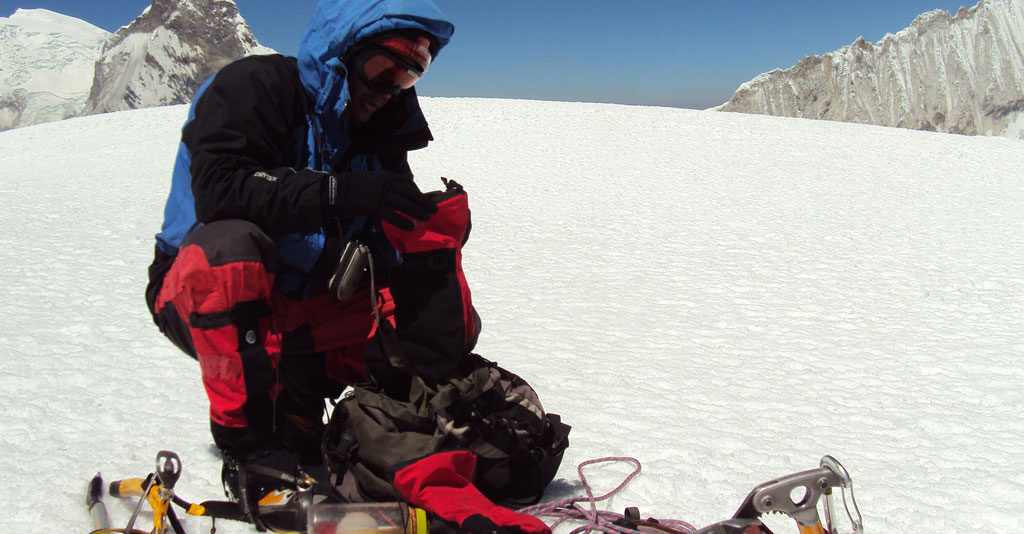
The Santa Cruz Valley is also a very popular destination, as it's the gateway to three coveted peaks: Alpamayo (5,947 m), Artesonraju (6,025 m) and Quitaraju (6,040 m). Two of them are emblematic, iconic mountains that have traveled the world on more than one postcard. In five days we can cross this valley, camping in unique spots surrounded by sharp peaks.
This range also has less-visited places, such as the Rurec, Quilcayhuanca, Rajucolta, Yanamayu and Mururaju valleys. There we can find endless technical mountain challenges, as well as easy climbs or multi-day hikes.
The Cordillera Blanca stretches almost 180 kilometers from north to south. In total it has 663 glaciers, 269 lakes, 42 rivers, 33 archaeological sites, 32 mountains over 6,000 m above sea level, and endless 5,000 m and 4,000 m peaks.
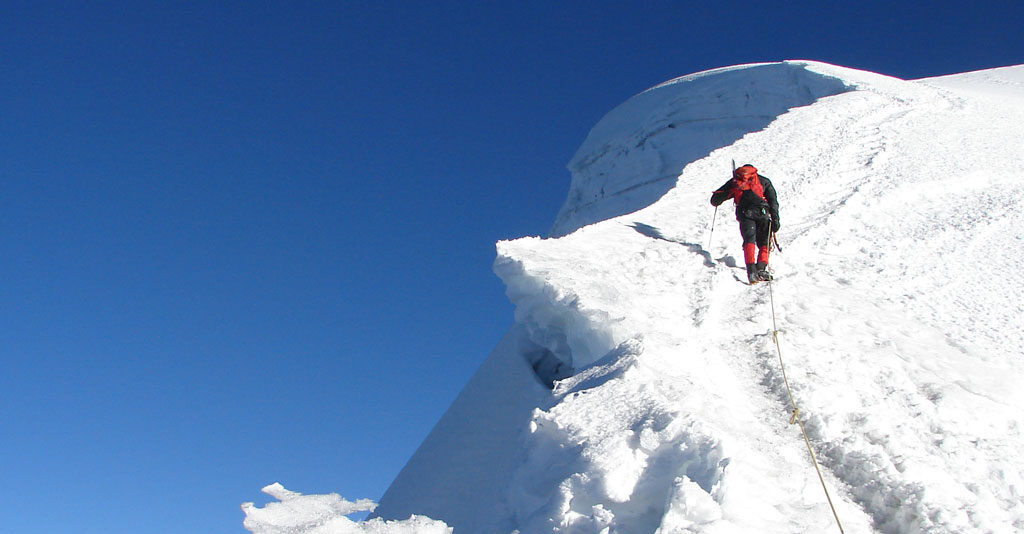
Whenever we travel, we look for the best possible experience of the destination we're visiting. Luckily we have five senses to enjoy the elements around us that are part of these experiences. We could go on describing hikes, ascents and climbs for hours, but without a doubt the most enriching part of a trip to Peru is heading into its valleys, tasting its traditional food, listening to a Huaraz huayno, shaking a hand and feeling the texture of its history, getting to know its people and customs. Experience Peru with all your senses. Will you join us on the next adventure?
Fernando Martinez – BC Cooperative