

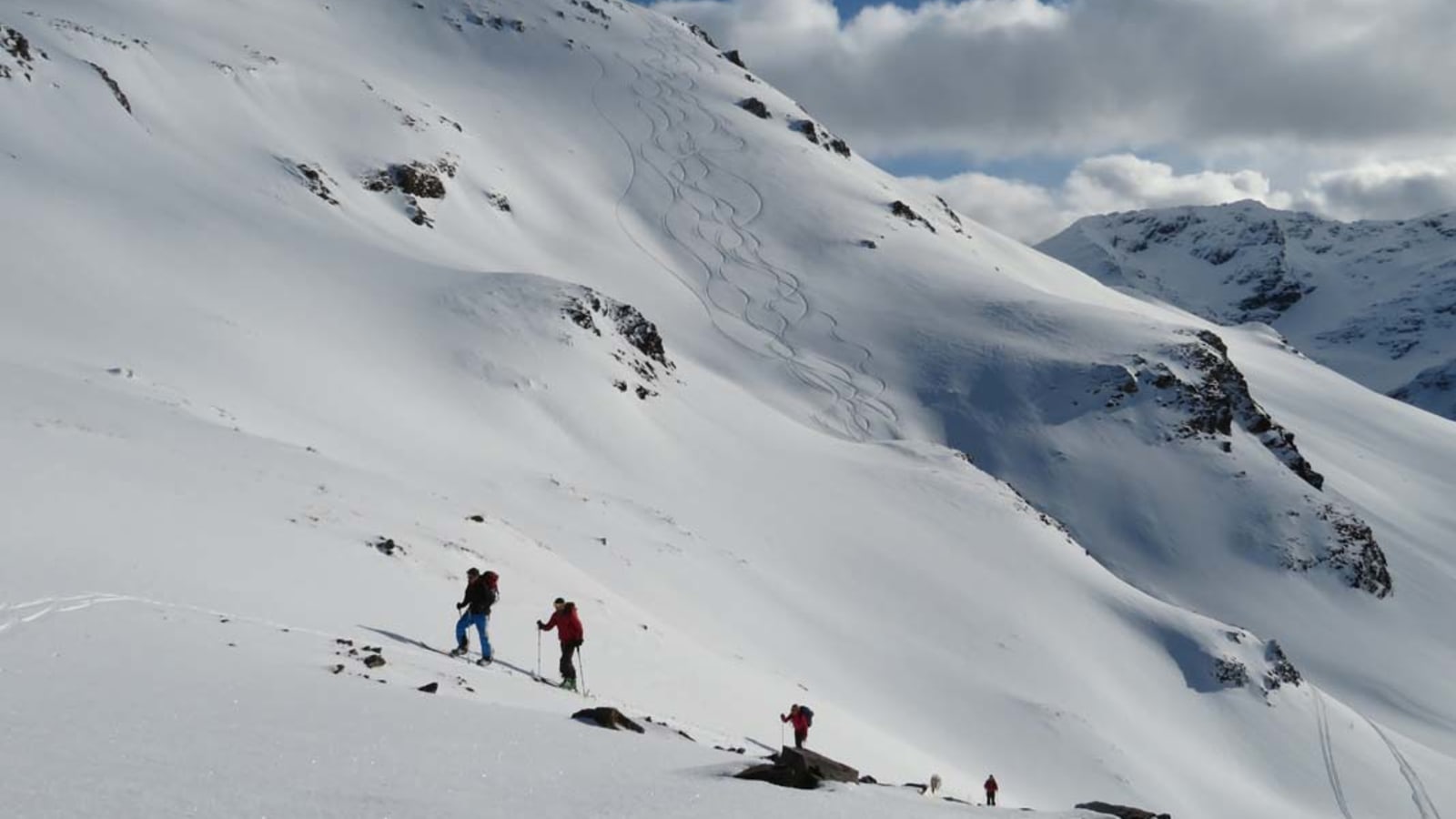
In the previous post we talked about terrain. We covered what avalanche terrain is, where avalanches can occur, how the angle and shape of the slope affect them, and which situations make the consequences worse, even for a small avalanche.
Now, for an avalanche to happen, besides the right terrain, we need the snowpack to be unstable, and something has to upset that critical balance. But what tools do we have to suspect that the snowpack is unstable?
Today we'll talk about a simple method that should raise our doubts and help us make decisions in the field. Red flags are simple visual clues, signs of potential avalanche danger. We'll use these observation techniques mainly to assess avalanche conditions in the terrain.
- Signs of recent avalanches
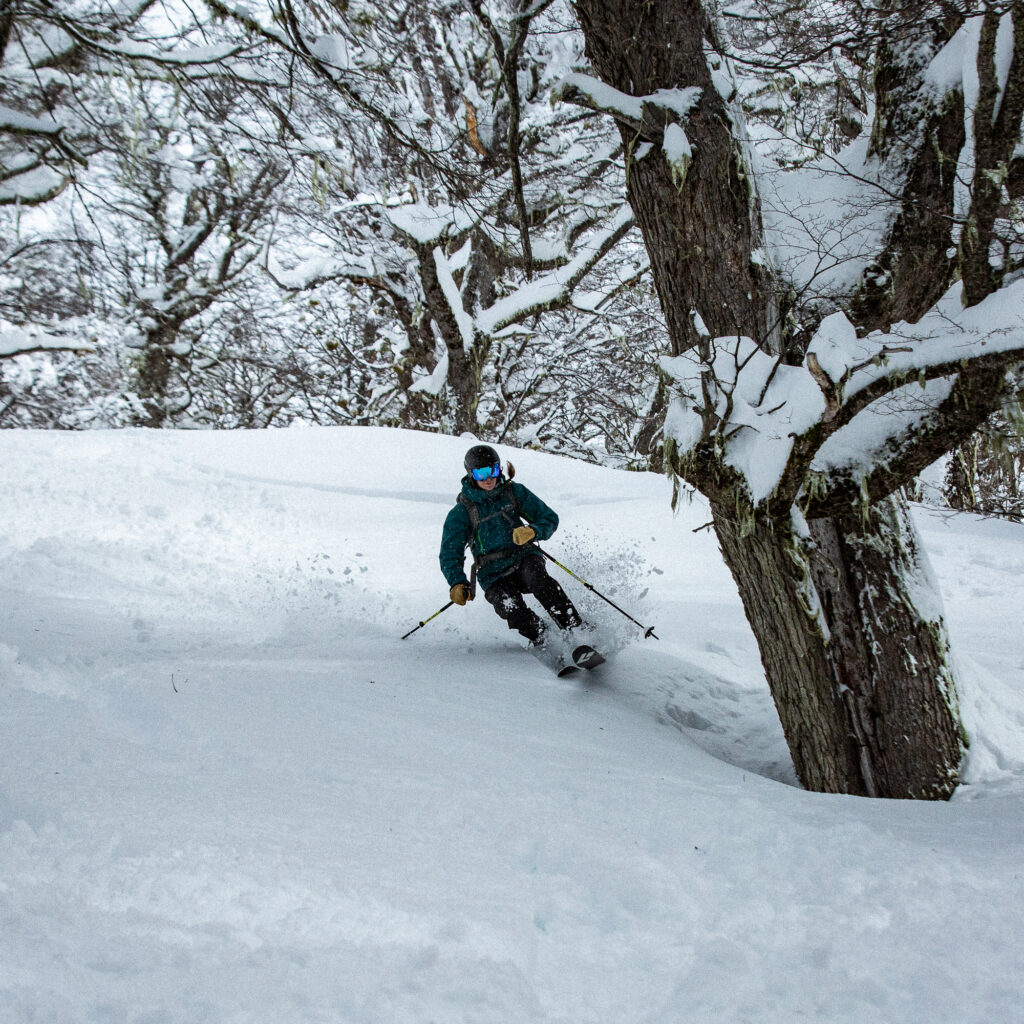
If I see signs of natural avalanches (crown lines, debris, or even one happening live while I'm skinning up), or I know that a skier recently triggered an avalanche on the slope I want to ski, that's a sign that the avalanche danger must be taken very seriously. They're happening, I don't need any more clues to think there is instability. "Well, maybe it's not that bad, let's try here or there." No. No means no. The only way to avoid getting into trouble is to get out of avalanche terrain. Ski slopes below 30 degrees that aren't exposed to avalanches from above. Ski in the trees with good anchors. Look for safe terrain!
- Collapses or cracking.
A strong layer over a weak one. We hear a sudden settling. We're skinning along and see cracks shooting out ahead of our ski tips. This is a sign of unstable layers. Settling or whumpfs are more related to persistent problems where the weak layer involves a considerable grain size. In our area it's more common to see cracking, or to trigger small avalanches while climbing on safe terrain. We can even look for this, for example when doing a kick turn. The bottom part of our "z" is left clean, and when I put my skis above it, this layer slides easily. A mini slab avalanche. These instabilities are often related to events within the storm that create different cohesion (changes in wind or temperature).
- Wind: Snow transport.
If the wind is strong enough to transport snow, avalanche conditions can change from stable to dangerous even without new snow. Wind can deposit three to ten times more than what actually fell. Pay attention to snow blowing off the ridgelines. How is it being transported? Does it cross the ridge and drift down slowly? Is a lot of it blowing off? Does it swirl and climb up with force? These observations tell me where the snow is accumulating. That will depend on the wind's intensity and direction. We're always most concerned about moderate speeds (20 – 35 km/h), because they build slabs below the ridgelines. With somewhat stronger winds (35 – 50 km/h) the loading will be lower than expected, possibly forming slabs at mid-mountain, behind obstacles on the lee side. When winds are strong (50 – 80 km/h) the snow has no clear pattern of accumulation, and the stronger the wind, the less defined it is. We also have to consider local factors; the terrain's topography often creates cross-loading we don't expect.
- New snow: Critical loading.
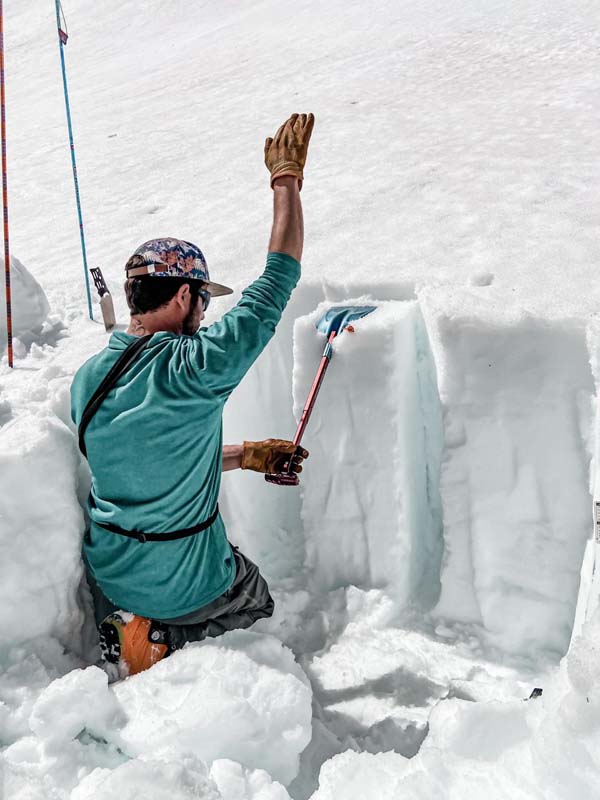
90% of human-triggered avalanches happen during or within 24 hours after a storm. Critical loading for our area is 3 cm per hour, 30 cm in 12 hours, or 80 cm in 24 hours. Often the best conditions for getting out are during the storm. But let's stay alert: how much did the forecast say would fall? How much has actually accumulated? Is it more? Is it less? How deep do my skis sink? And my boots?
If we get a snowfall with heavy accumulation, even without wind, the temperatures before, during, and after it will determine the level of cohesion. For example, in our area storms usually come with some wind. But when that doesn't happen, let's watch the temperatures. Heavy precipitation and moderate temperatures will create storm slabs on all aspects. These will be more sensitive to triggering during the storm and up to 24 hours afterward.
- Rapid temperature rise.
Regardless of the starting temperature, any rapid warming is dangerous because the snowpack doesn't have time to adjust to the temperature change. Be alert on the first warm day after a storm cycle. How many times have we seen roller balls rolling down the slope? That tells us there is no good surface cohesion. The warmed, wet snow on top doesn't bond to the drier snow beneath it.
The temperature rise has to be sustained. High temperatures for 6 to 12 hours is highly critical for the snowpack's balance. Even in spring, the freeze-thaw cycles can be "normal" or more intense, depending on the temperature increases.
SO, TAKE THIS WITH YOU
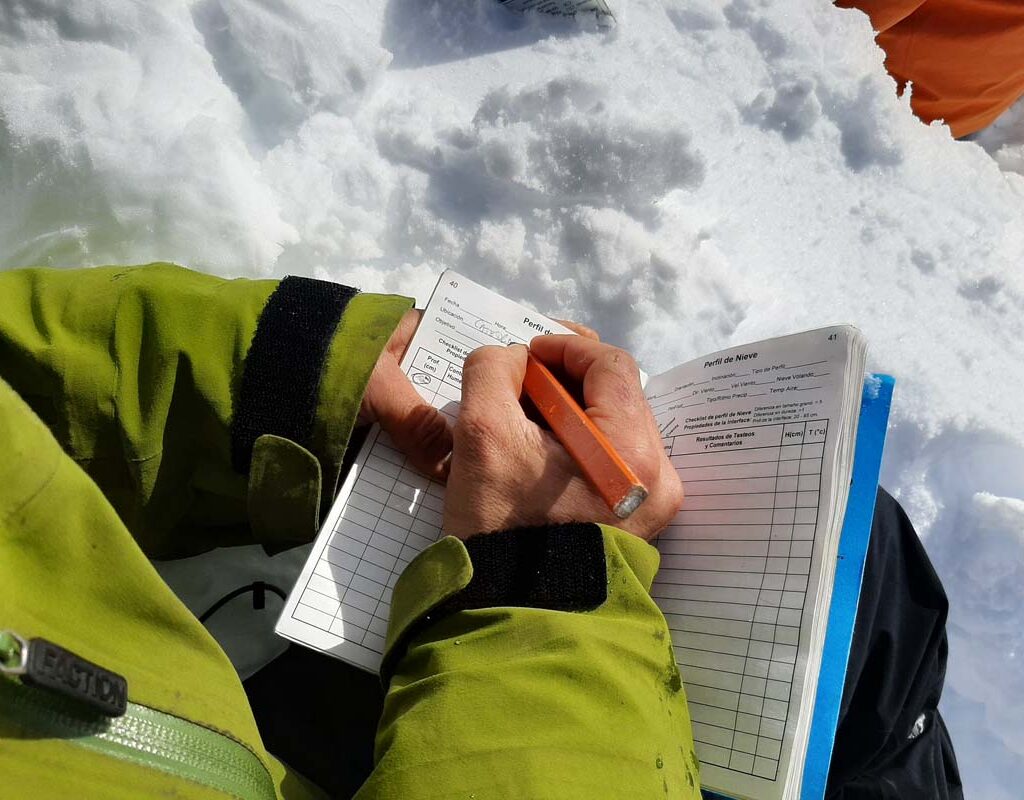
It's important to go from the simplest to the most complex. If the mountain is showing us signs of instability, we don't need more information to confirm it. We often look for ways to justify our decisions, and that's the worst thing we can do. Let's pay attention to the simple, the basic; this method focuses our thinking on real evidence and, that way, helps us choose the most suitable terrain for our day of touring.
Here's a video from the Utah Avalanche Center that sums up this post. Enjoy the descents!
¡See you next time!
Fer Martinez – BC Cooperative